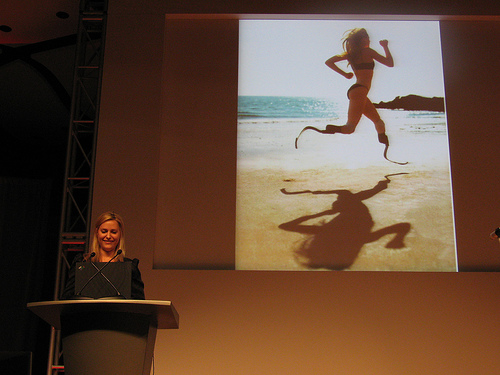
last weeks’ human 2.0 conference at the media lab was astonishing: hugh herr and john hockenberry banded together to paint a picture of a future where disability can be leveraged as a way to gain super-human capacities. i highly recommend watching the streaming video; both the morning and afternoon broadcasts are available. the most amazing part was a talk by aimee mullins, an athlete, a model and an actress with both legs amputated below the knees. she compared prosthetic legs to eyeglasses, and in the same way that we wear designer eyeglasses she has designer legs (she was wearing her 4-inch heel legs for the talk). she made it clear that with enough attitude you could pull off anything as she left the crowd dumbstruck with her presence. probably the reason she was featured in matthew barney’s cremaster cycle:
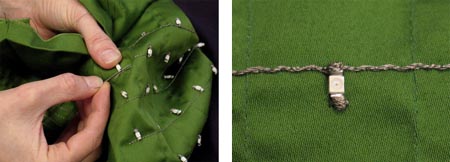
sewing circuits

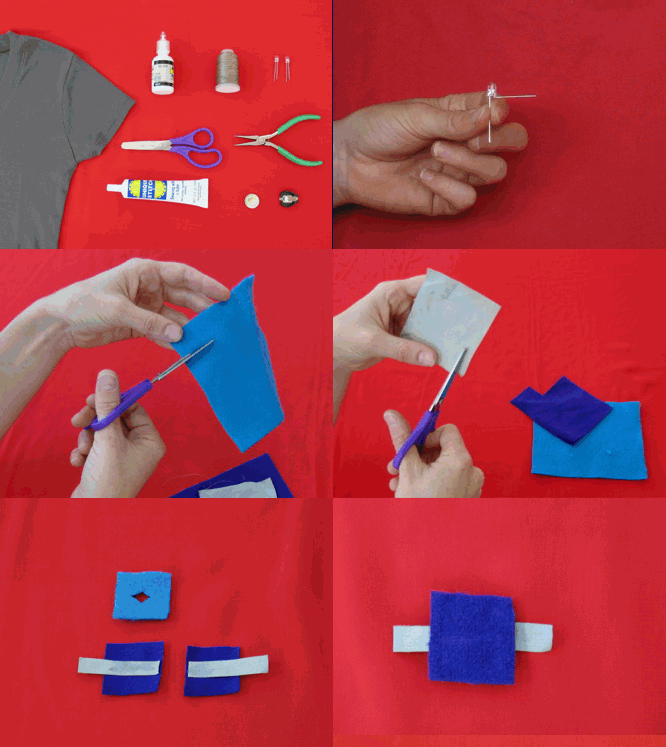
leah buechley makes some beautiful electronic fabric with clever solutions to long-standing problems, such as washing and flexibility. the best thing, however, is that she has detailed do-it-yourself instructions for sewing your own clothing 2.0:
via edgy product
self-maker

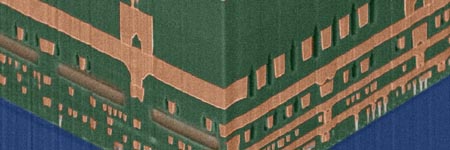
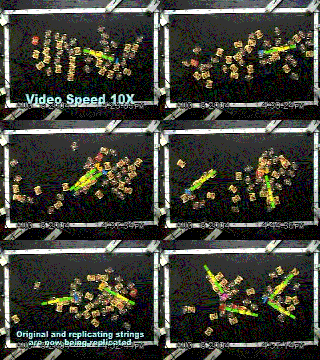
when IBM announced that it was going to implement a new self-assembly process to reduce computer chip feature size, increase processor speed by 35% and reduce manufacturing energy by 15%, i looked into exactly what was meant by “self-assembly.” one-time medialab colleague saul griffith’s phd thesis proposed completely physical systems for self-replication inspired by biological computation and replication. as part of his thesis he built a gross self-assembler out of an air-hockey table and carefully designed pieces that only lock in particular ways, enabling self-assembly of complex shapes and self-replication of compound objects:

while it’s been demonstrated through robots, ibm designed a new material which produces trillions of air gaps when heated to assemble the channels of the multi-layer chip – the material “assembles” itself. here is saul’s TED talk about the potential for physical computation:
cell chop
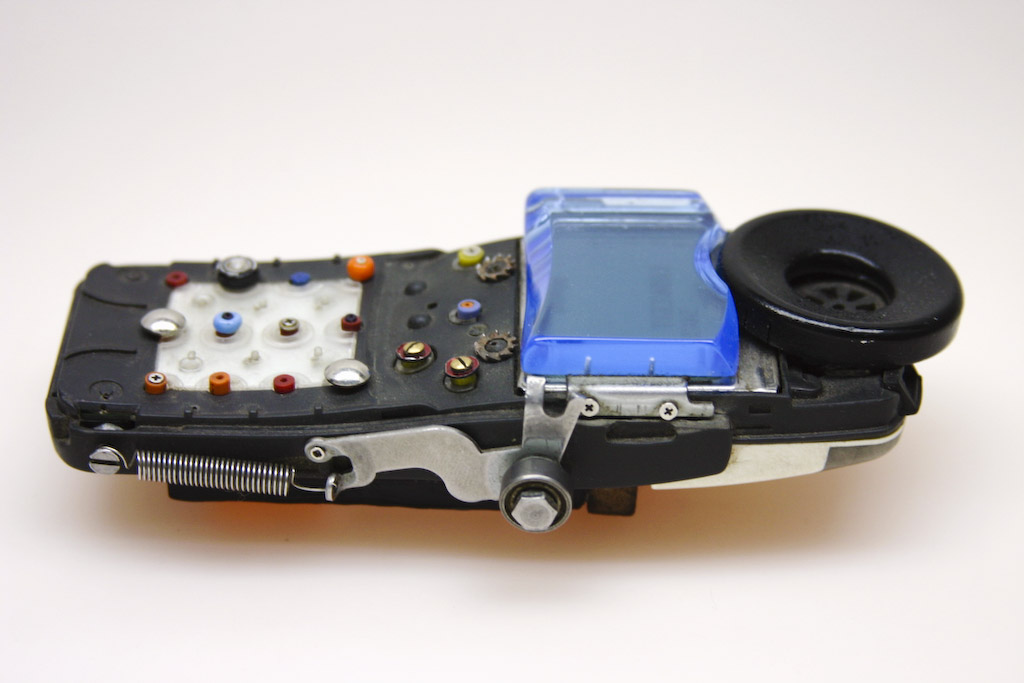
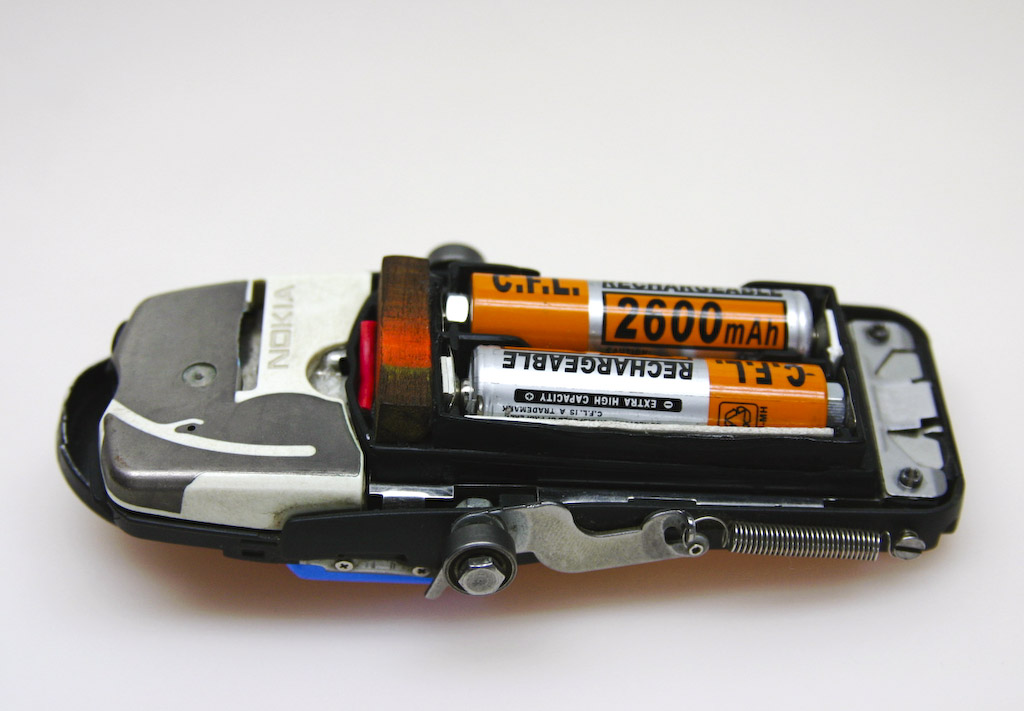
does this look like the future of electronics? i think so. this cell phone by mehmet erkök is just a stripped-down nokia, modified with a few choice elements to make it his own. at the same time as the phone becomes a unique craft object rather than a cheap commodity, it gains interestingness(TM), hackability, customization, personality, and hints of a future where taking apart and putting together electronics is how we use them.
via boingboing
roving products
according to bill gates, robots are here to stay. already we have robots that do serious things like shoot rockets and clean the floor. but recently we have also had robot versions of normal products: a robot boom box, a robot alarm clock. given all of today’s concern with energy and pollution, how can we decide what products deserve to move and which ones we should walk to? after all, before the coffee maker and toaster come find us for breakfast, it would probably be more effective to just ride around on wheels ourselves, no?
framed graffiti
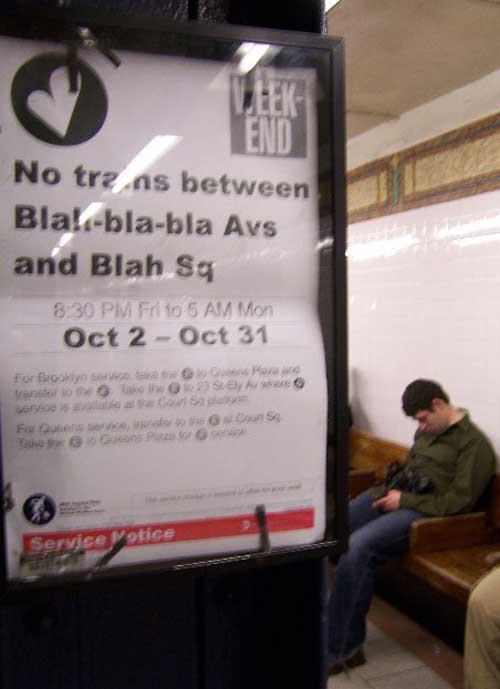
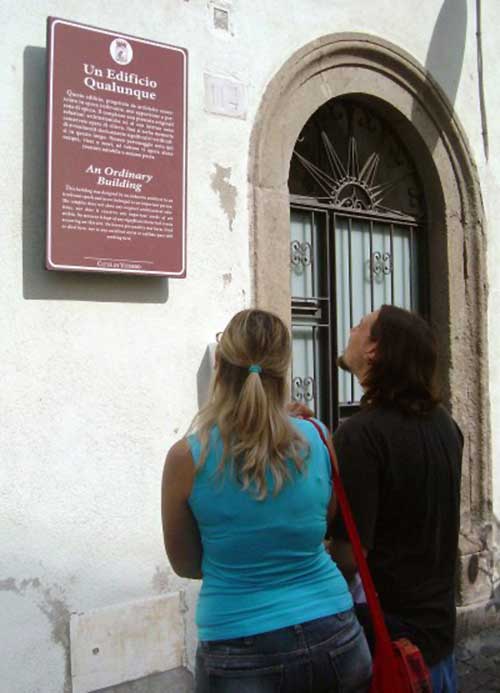
seeing this clever subversive hilton advertisement by vinchen brings to the foreground an idea i’ve been toying with for a couple of weeks – framing graffiti – or how to make guerilla art acceptable. andy warhol once said that people don’t really like art, but it’s hung very nicely in museums. by the same token, so long as things are nicely hung (and framed) they can pass in the public sphere – even when somewhat subversive. of course the trick is how much they can subvert without attracting unwanted attention and being taken down. many framed pieces of graffiti aren’t really subversive at all, like these humorous signs made in the style of official labels:
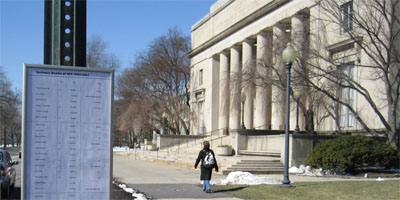
on the other hand, you can also attract attention to real issues in such a way that no one is empowered to remove the offensive sign – as with memorials. in an exception to the rule, i’ll post my own piece – untimely deaths at MIT – because i believe that the real job of graffiti, to democratize public space, can be expanded to fill the omissions in mainstream media.
oh, and check out the entire culture jamming page on wooster collective whenever you have a chance
killer pollution

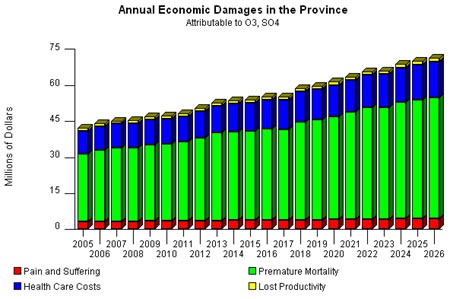
thanks to the true cost clearinghouse i came across this program made by the ontario medical association that allows you to calculate the costs of air pollution according to numerous criteria and very precisely. i always thought pollution should be measured in terms of health and money, not some future flooding and imperceptible global temperature change. this program is part of a new generation of calculators that allows imperceptible damage to become tangible, and the first to do so in a truly scientific way. the sooner we can readily perceive the hidden consequences of our actions, the sooner we might be able to act globally.
parasitic entertainment

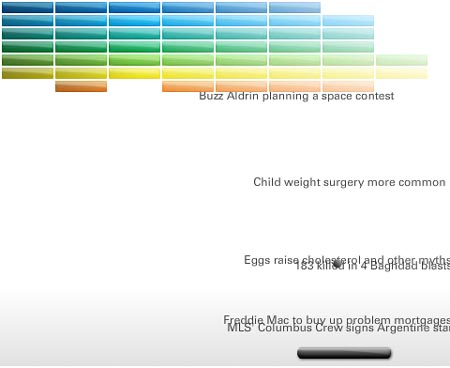
while advertising has always seemed like the parasite of television, televisions are become parasites of our attention and visual field: today we can get television in our telephones music players gas pumps vending machines and everything else then soon television will have to convince us to watch it. newsbreaker is a cognitively taxing version of brick-breaker where news headlines fall out of the bricks as they are destroyed. it offers content on top of content, and makes reading the news a little less fun than playing a video game. what next? sponsored bricks?