youTruth

perusing the suppliers of the laptop i write these posts on, i came across a supplier to lenovo (as well as acer, dell, fujitsu, motorola, nec, samsung, and siemens) that was investigated by the hong kong students and scholars against corporate misbehavior for labor violations. their report on factories in shenzhen single out one taiwanese-owned factory, shenzhen yonghong factory for the most violations, including child labor, excessive overtime, pay below the legal minimum, lack of social insurance and occupational health risks. from the report:

“Yonghong was found to be hiring more than 200 child workers under the age of 16, mainly students seeking summer jobs. Out of the 25 workers whom SACOM interviewed, 7 were child workers. Many child workers were students from rural Henan and Shaanxi provinces. They were brought by their teachers to work in Yonghong, partly to pay off the school fees they owed. Since they were considered ‘unskilled’, the factory required them to work an extra 1.5 hours per day without pay to compensate for the ‘lower than normal productivity’. Normally, child and student workers worked 13 hours per day or 390 hours per month. During peak seasons, they worked more than 400 hours and 60 of those hours were without pay.”

“The legal minimum for overtime pay is 6 and 8 yuan [78 cents and $1.04] per hour respectively for normal days and holidays. Yonghong currently was found to be paying 4.5 and 5.8 yuan [59 and 75 cents] respectively.”

“Adult workers at Yonghong worked 296 hours per month during low season and 374 hours during peak season, which were both way beyond the legal maximum of 196 hours per month.”

the report names the fsp group as the owner of this factory, which mainly produces computer power supplies. it also cites a number of other factories for other violations, including suppliers for apple, canon, compaq, ibm, nortel, sony, toshiba, nokia, hp, philips, sharp and lg.

one reason i bring up this article is that i have been researching the consumer electronics supply chain, which is largely unregulated and untraceable beyond primary suppliers because of long-standing personal- and family-based supplier relationships in china. in take note: laptop supply chain is not what you’d expect there is a near total lack of end-to-end accountability for the producers of the parts that end up in brand-name consumer electronics. another is that the fsp group was kind enough to post a public video which shows none of their manufacturing sites (above). i wonder how long they will keep my comment on their video – it’s the only one there so far.
Posted in blogogracy, marketing, product design | Comments closed

loopy design

recyclingsymbol.jpg

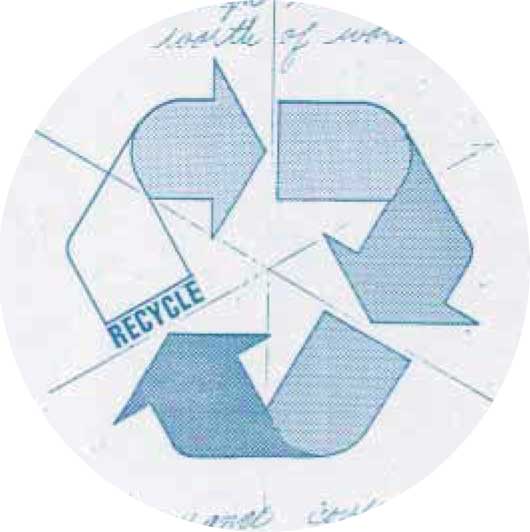
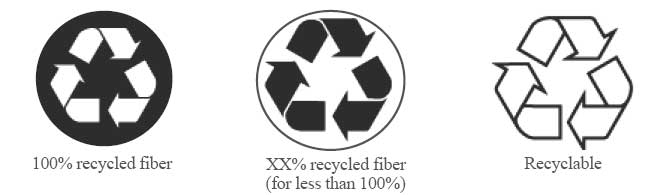
in the aftermath of the birth of environmentalism in the US and the beginning of earth day in 1970, paper recycler ‘the container corporation of america’ sponsored a student design competition for a symbol that represents the recycling process. in september 1970 then-college senior gary anderson won the $2,500 prize with his now-infamous ‘mobius loop.’ immediately the symbol was adopted by the paper industry, and while the competition sponsor tried to retain copyright their claim was contested because it had already achieved notoriety. rather than fight the claim, they dropped it and went on to design two variations on the original (below) and rotate the symbol by 60 degrees from the original proposal (above). you can read more about the designer and his story in this pdf.

recyclingsymbol2.jpg

Posted in 2d, conviviality, visualization | Comments closed

user-generated art

stingler1.jpg

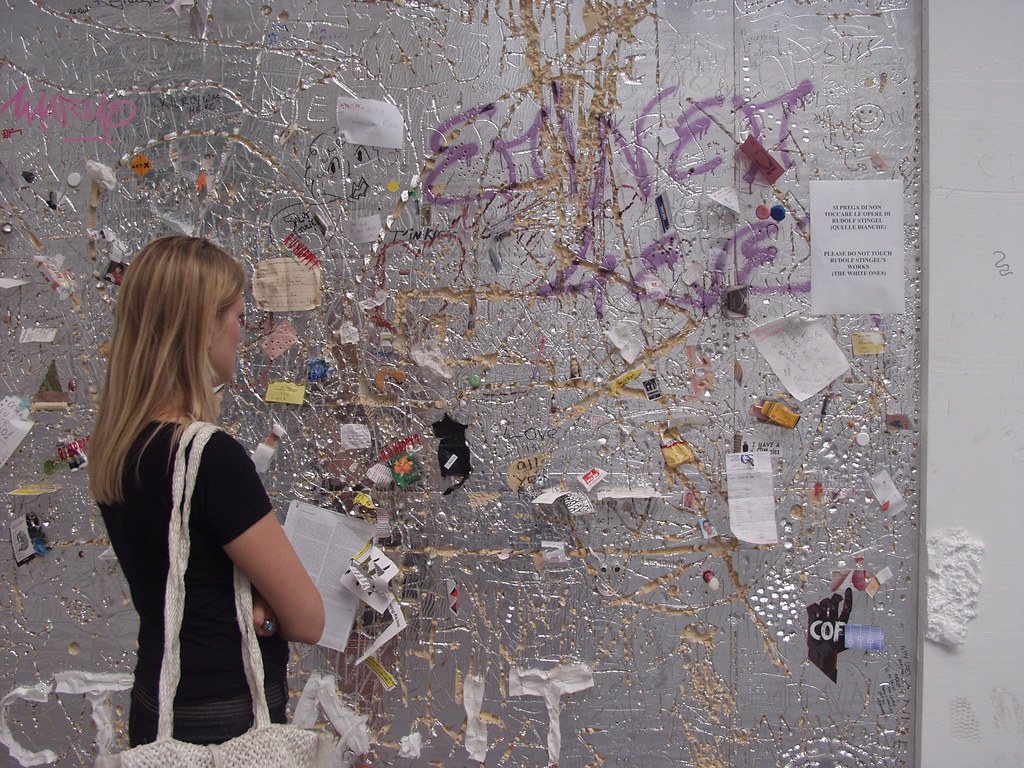
rudolf stingel makes installations out by covering the walls of a gallery with panels of celotex tuff-R, an insulated foil-covered foam that invited visitors to scratch, gouge, rip and insert objects like a giant graffiti wall. it’s a very moving experience because there is a chaotic overlay of multi-scaled art unique and predictable. these installations make the point that user-generated art can be gorgeous as long as the medium is suitable for a wide array of participants and maintains an consistent esthetic no matter what people do. it behaves very similarly to comments on a blog post, sometimes childish and obnoxious and sometimes sensitive and delicate but always revealing of the particular viewing public’s soul. i photographed this wall in venice at the 2003 art biennial.

stingel2.jpg

stingel3.jpg

Posted in art, blogogracy, customization, guerilla, materials, open objects, soft/glowing | Comments closed

carpenter shelter

daylaborstation1.jpg

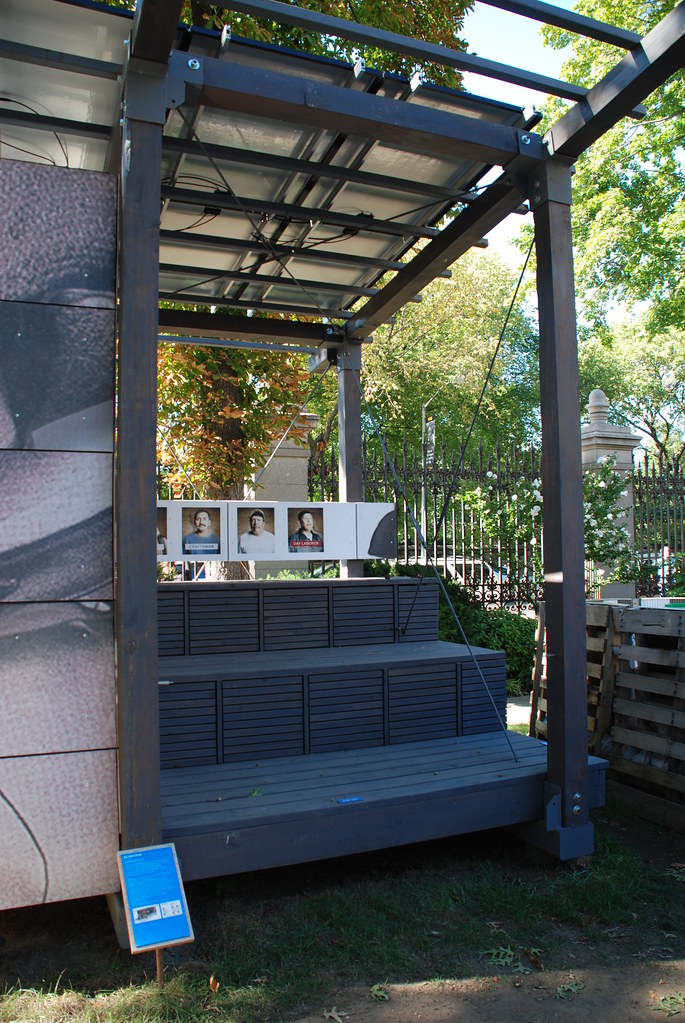
at the cooper hewitt’s lackluster ‘design for the other 90%‘ exhibit i was puzzled by the ‘day labor station:’ a well-intentioned shelter for immigrant day laborers who – at least in california – seek day labor by standing around home supply stores waiting for an unscrupulous contractor to pick them up. the solution – for these architects – was to design a shelter where the day laborers could way more comfortably, kind of like a bus stop except a little more shanty-esque (below). i suppose the next logical step would be to design more comfortable cargo beds for pickup trucks so that they can relax on the way to and from their dangerous, unregulated and underpaid work. maybe these shelters imply that the community condones these practices? on the other hand, maybe architects could make a bigger difference by insisting on safe labor, living wages; and maybe, just maybe, if carpenters wanted to they could build their own shelter (and it would probably look sturdier). sometimes i wonder if we need designers at all…

the rest of my images from the show are here

daylaborstation2.jpg

Posted in architecture, conviviality, fabrication, marketing, possessed products | Comments closed

costly disposables

greenpeace is at it again, after successfully bullying apple for its environmental carelessness by ranking it as the worst PC manufacturer in terms of environmental impact (march ’07) and motivating job’s new recycling program, a new greenpeace study reveals the presence of (banned) brominated fire retardants in the iphone – which is leading the state of california to threaten a lawsuit for use of banned (carcinogenic) substances.

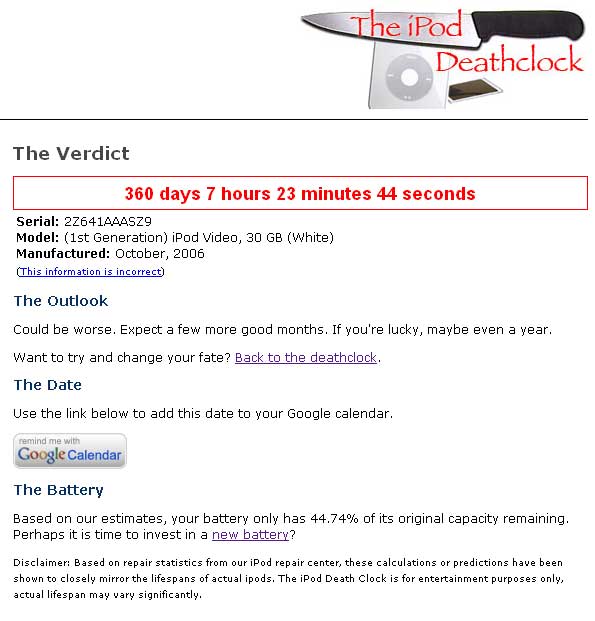
but who cares about brominated fire retardants (which are prominent is all consumer electronics)? apple does much worse for the environment because it sells products that are made for disposal, with no user-replaceable parts! the key to environmentally sustainable design is long product life which implies that users have the ability to repair, replace and upgrade products to extend their useful lives. the lack of removable battery in the ipods and iphones 1)encourages early disposal of the entire device and 2)requires excessive shipping in order to ever replace the battery. you could argue that sending it back to apple assures that the old battery would be ‘recycled‘ but how often does this really happen? and why? according to the ipod deathclock, a video ipod used 10 hours a week while jogging (and twice dropped) has a total lifespan of about two years:

ipoddeathclock1.jpg

in case you do want to preserve your purchase, be aware that shipping an entire ipod to california and back (from boston) just for battery replacement generates 2.8kg of CO2 by air and 0.6 kg of CO2 by land, about ten times more than just shipping batteries the same distance. but how can we estimate the environmental impact of devices that discourage maintenance? if a consumer is discouraged from replacing a battery and decides to buy a new device instead, the environmental damage is compounded and within two or three development cycles an ipod user can generate double the environmental impact of anyone else. unfortunately, apple’s lead is encouraging other manufacturers to omit removable batteries from their products, so that the net effect is multiplying rather than decreasing.

Posted in energy, marketing, possessed products, product design | Comments closed

rainbow builders

colourlovers.jpg

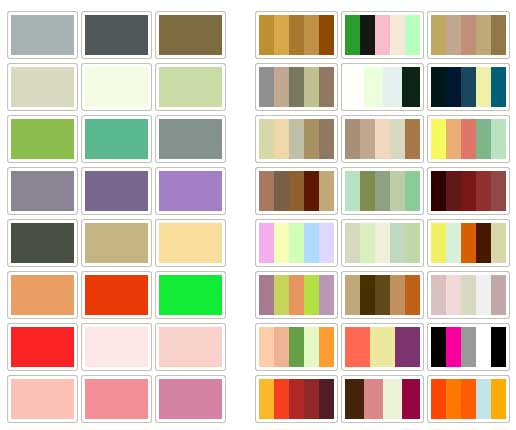
colour lovers is social network built around color palettes, where you can upload, browse and vote on user-generated color schemes. and the color palette generator automatically matches any image on-line. it’s nice to see user-generated content and web-based tools that can really start to be useful in designing things. it would be even better if design software included user-generated content, so that we could get peer evaluations as we are making those difficult design decisions

palettegenerator.jpg

Posted in blogogracy, open objects, perception, visualization | Comments closed

stop&chop

ponoko.jpg

i’ve been posting for a long time about open design, or the free dissemination of design knowledge. ponoko is a site that allows you to share designs for furniture cut out of sheet material like the plywood pepe baby’s chair (above). on the one hand, paying $120 for a tiny plywood chair seems expensive, on the other, it seems like a platform for potentially cool sharing of design knowledge. plus, from the pictures it’s pretty easy to figure out how to copy the design and re-submit it yourself.

Posted in customization, fabrication, futurecraft, open objects, possessed products, product design | Comments closed

watching paint dry

finally someone has posted the entirety of ‘le mystere de picasso’ (the mystery of picasso) in 13 parts on youtube. the incredible film shows picasso’s painting process by filming a series of paintings as they are made. this clip shows how they are made: by filming through a sheet of glass onto which the master paints. now only if we could see the same for all art.

Posted in 2d, animation, art, visualization | Comments closed