the web of today uses semantic tags to underscore relationships and make searching easier. topical relationships – while fundamental – may miss some of the subtler relationships, such as those that only appear over time. what if the history of information could be part of its tag, and what kind of understanding could this bring about? the clip above is a timelapse of the wikipedia page about the virginia tech shootings in the first 12 hours, a kind of visualization of the page’s history. on a lighter note, hayes raffle and dan maynes-aminzade’s fuzzmail records the act of typing as part of an email. in both cases we witness the making of something more than its end result. these projects integrate many instances of data into a visualization of activity over time, and they need to be seen dynamically to be understood. wouldn’t it be cool if more of the information we digested could be seen like this, loading from the past to the present at the same time as from top to bottom?
illustrating infinity
this video accompaniment to rob bryanton’s book ‘imagining the tenth dimension‘ is so well-done that i don’t know whether the illustrator (oh!media) or the author had more to do with making the concept understandable. now that video is so easy to make and share, it serves as a tool for expressing and publicizing all sorts of work – and without it, good work can go unnoticed. as video becomes a necessary part of the craft of ideation, what impact will it have on the kinds of ideas we have?
Posted in visualization
Comments closed
hackopedia
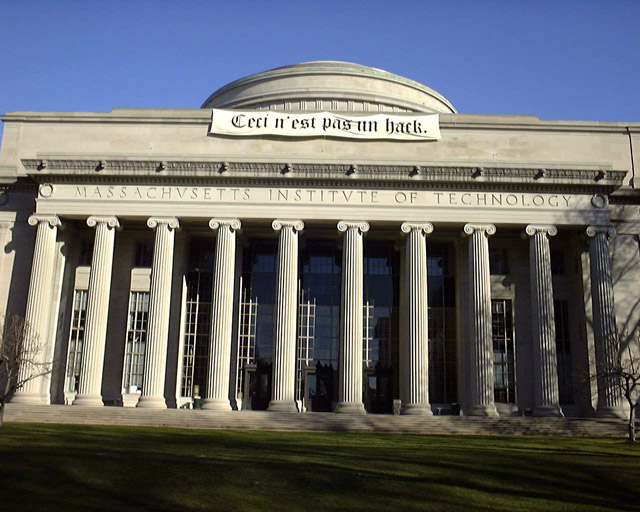
at mit, hacking is a way of life – not just hacking into computers and phones, but hacking in general as a way of creating. i found this repository of all hacks since 1989, including hacks of the subway, robots, vending machines, skylights, the dome, and of course harvard.
Posted in guerilla
Comments closed
pulse spy
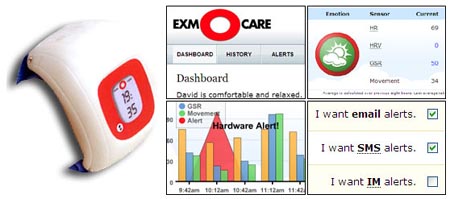
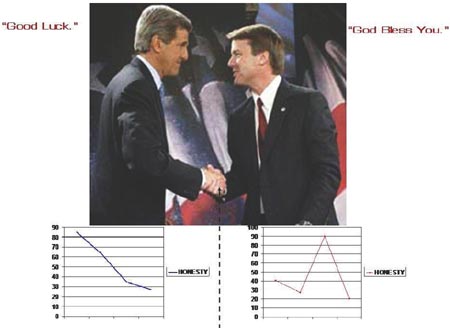
exmovere makes sensors that can monitor a user’s emotional and physical state. why? to “be there when you can’t be there.” they also offer “group monitoring solutions.” so, the age-old (fictitious?) application of remote care for the elderly comes up. but who knew there were even more sinister applications? one project, ‘mr president,’ proposes a TV show where presidential candidates are biometrically monitored for stress, anxiety, fatigue, honesty and attention.
finally, they offer an automated product design interface that allows you to embed biometric sensors in anything (clothing, furniture, consumer electronics, cars, …). i doubt that monitoring people with computers offers any real advantages over social contact, but one thing is certain: once we get accustomed to sensors recording our lives, it will be more likely for presidents to be monitoring us than the other way around.
Posted in surveillance
Comments closed
ms martini
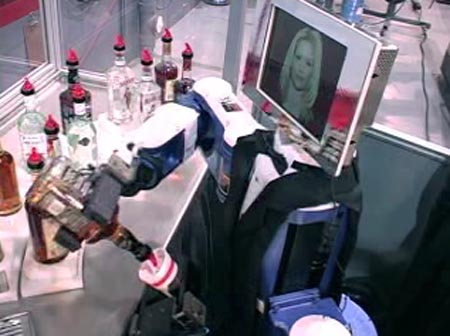
robo-bar is a fully automated bartender. talk about sociable robots! not only does she get you drunk,she wears a bartender uniform and has a real human face on a computer screen head. thirsty?
Posted in evil robots
Comments closed
soapbox 2.0

for a few weeks i’ve been following gail orenstein’s flickr photo stream, not because she’s an old friend i’m trying to catch up on, but because she uses it as a sort of graphic political blog and discussion forum. it’s interesting and often sexual but most of all a great hack for a site that was originally meant as an on-line photo album. so what if the titles seems a little long?
Posted in guerilla
Comments closed
product jammin’
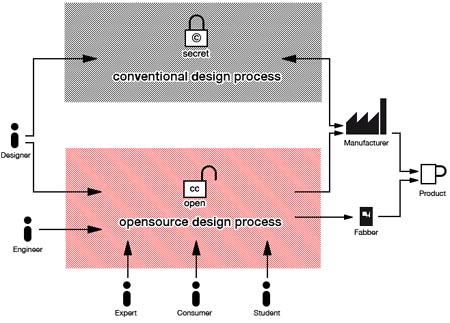
open source has been transforming the distribution model for software, in large part because it’s so easy to make and distribute software nowadays. at the same time open-source has been proposed as a better way to design products, initially by now-defunct thinkcycle and more recently through opensourceproductdesign. the idea is that a lot more efficient development can happen if people work together to identify needs and brainstorm solutions. unlike software, however, products are still very difficult to design because they require expertise in numerous fields and there remains no easy way to distribute product prototypes as easily as software releases. maybe we need a more intuitive product development platform which permits sharing of physical designs as fluidly as computer programs, so that people can ‘download’ the latest version and make changes rapidly available to the community.
via amanda
Posted in open objects
Comments closed
meta-me
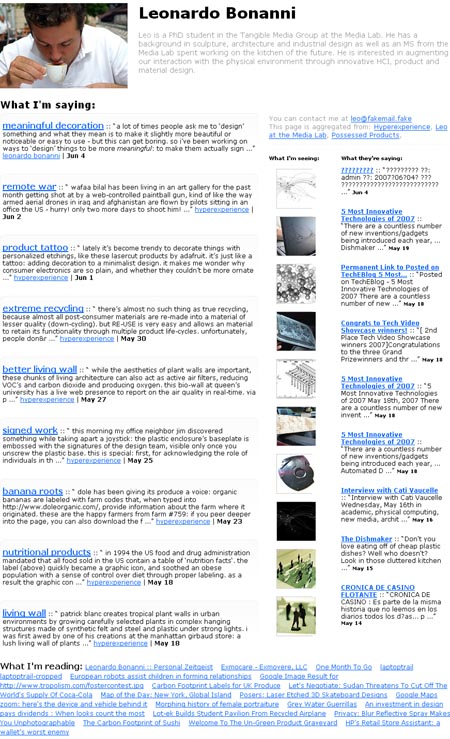
matt made a great app a month ago, and i should really have blogged about it since my life is the sample page – but you can download it and use it on yourself (or anyone else). just like spluttr is a search engine for every kind of data, personal zeitgeist is a feed of everything someone does. and if you live on-line like i do, it’s a much better way to catch up on my friends (and me). it’s also a great way to automate stalking.
Posted in visualization
Comments closed