camera diaries

sensecam.jpg

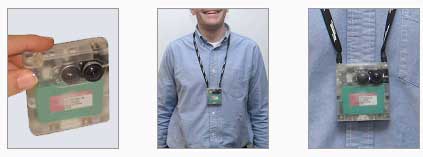
lindsay williams’ sensecam is a wearable digital camera with a wide-angle lens that captures time-lapse movies of the wearer’s activities. her team has done a study suggesting that the camera can be useful to help someone with dementia remember events. a woman who watched the recording could then remember events for several months, as opposed to a written diary after which memories only lasted days. this is a clip she made of what the camera might capture on a typical day, her commute to work:

MIT medialab student brian clarkson’s 2002 thesis ‘life patterns‘ (pdf) describes a system that he wore for several weeks. it was far bulkier than the sensecam because it captured full video of the front and back of the wearer on a computer hard disk:
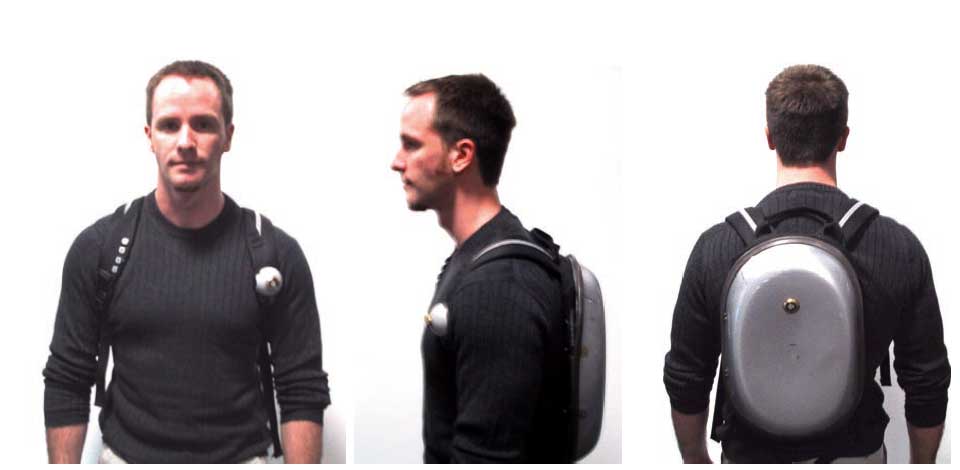
camera-diaries-1.jpg

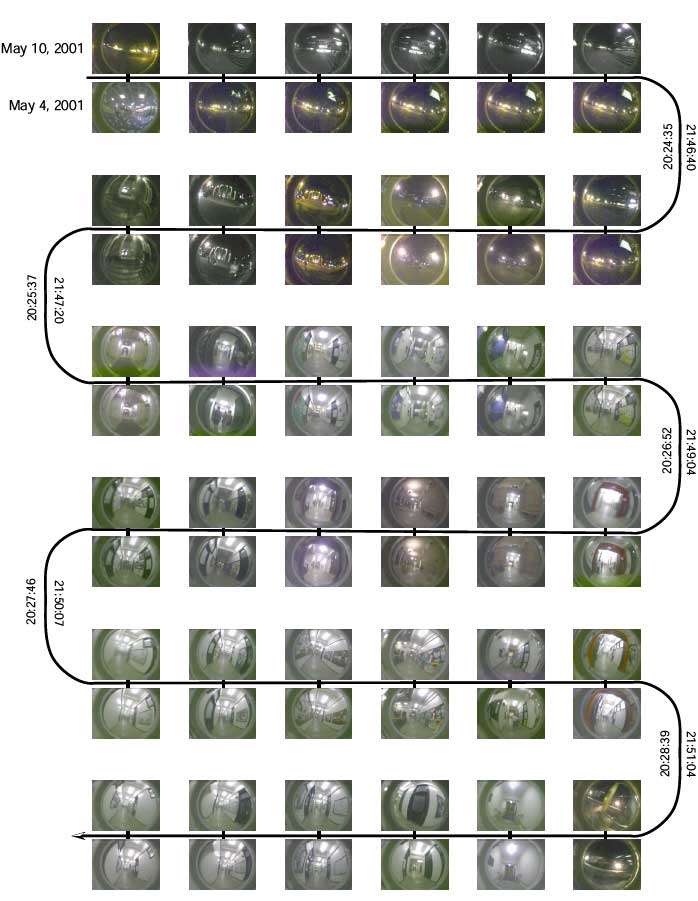
the problem with any such logging system is how to deal with the incredible amount of information and make it useful. clarkson’s thesis proposed image understanding software that could identify activities and places. and williams uses time-lapse to compress data. but a much more significant problem is motivation: why would you want to record everything that happens to you? what if your life is not interesting? and if it is interesting, it is better to invest some effort in capturing it consciously – not through a tiny wide-angle camera. one conclusion of clarkson’s system is that activites that are repeated can be removed from the log: as in this monotonous walk into the same building on two different days:
camera-diaries2.jpg

probably the most reliable way to make a life-logging system work would be to eliminate all of the repetitive activities and distill out only the new faces and places that one encounters.

Posted in blogogracy, human2.0, surveillance, visualization | Comments closed

the first music videos

minniethemoocher1.jpg

we may think of music videos and motion capture as recent technologies, but they were all pioneered in fleischer studios‘ seminal betty boop cartoons of the 1930s where popular musicians were incorporated into surreal and suggestive musical cartoons. Max Fleischer invented the rotoscope, a technique whereby live-action footage was traced to make hand-drawn animations. the result was life-like cartoons drawn after dancing and singing stars of the day. cab calloway and his orchestra were the centerpiece for three of these: Snow White, Minnie the Moocher and The Old Man of the Mountain (below). While the entire band participates, only cab is traced to capture his signature dance routines. One cartoon also exists featuring louis armstrong and his orchestra, in which the band members also contribute their voices and gestures to the characters (bottom).

The Fleischers’ Snow White (1933) is without question superior to the disney version, and on top of that it’s part of the public domain: DVD quality download here (332MB) and other formats here.

“Minnie the Moocher” (1933) is a trippy lesson in why running away from home is never a good idea. It features Cab Calloway as a dancing ghost, his backup singers as ghouls and his band as animals and creatures in a mysterious cavern. You can download a DVD quality copy(342MB), as well as other formats at the minnie the moocher page at the internet archive.

1933’s The Old Man of the Mountain is perhaps the most impressive animation of the collection. You can find the DVD quality download here(320MB) and more formats here.

1931’s “I’ll Be Glad When You’re Dead You Rascal You” is the only example I found starring Louis Armstrong and his orchestra, and it is by far the most culturally insensitive by today’s standards. Louis and his band members play grass-skirted dark-skinned cannibals perpetually clutching forks and knives while chasing betty and her co-stars bimbo and koko through the jungle. you can download a DVD quality version(333MB) of the clip as well as other formats at the internet archive page.

Posted in animation, livingbreathing, marketing, visualization | Comments closed

design for keeps

tunenradio.jpg

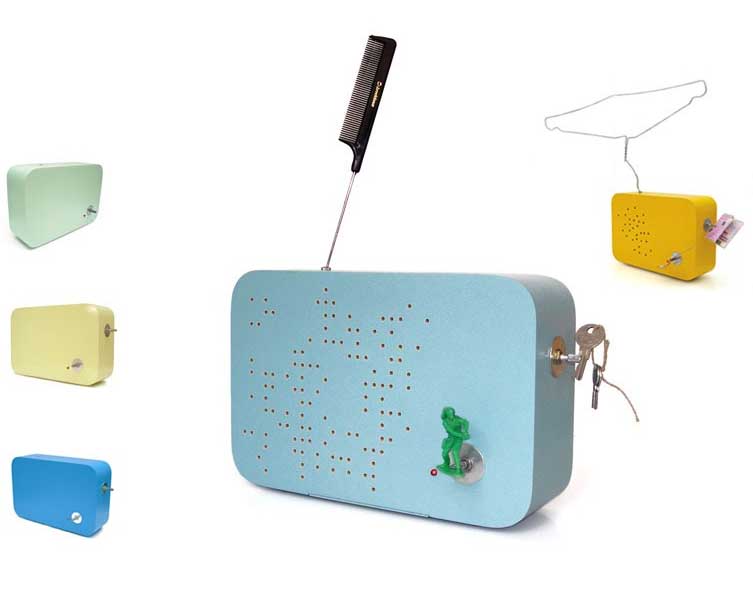
in today’s homogeneous product landscape it seems that nothing off-the-shelf can compete with a hand-made gift. but few of us have the time or skill to craft presents for each other, so we leave the personal touches to cards and packaging. instead of useless wrappings, why not design products to be unfinished so that the finishing touches communicate the act of giving? wouter geense design studio achieves this with they tune ‘n radio, which is a plain box to which owners must add a volume knob, an antenna and holes in order to make a working radio. while whimsical, the personal touches add value to the commodity and make it more likely to become and heirloom, shared and repaired by not thrown away.

via

Posted in environment, fabrication, futurecraft, product design | Comments closed

re-furnish

wallpaperchairs.jpg

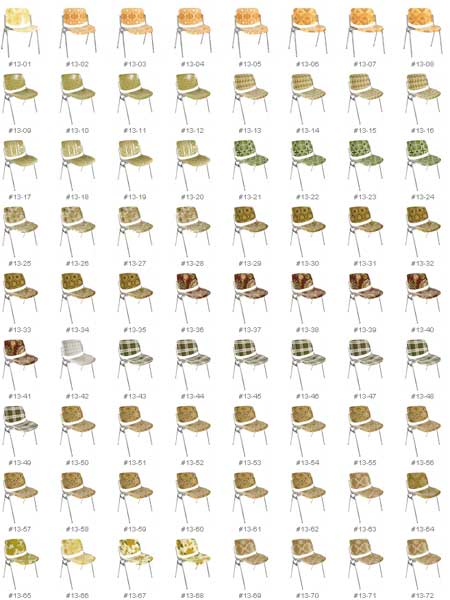
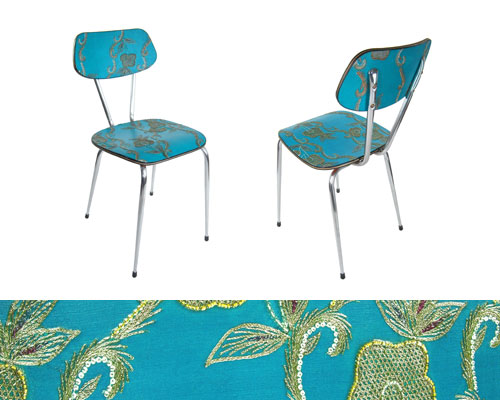
the best kind of recycling is up-cycling, and there’s nothing better than transforming trash into something more valuable while conserving resources. in the spirit of william good, project 99 takes old chair frames and re-upholsters them with rubber, cow hide, wallpaper(above) or vintage clothes (below). the junk furniture can then be re-sold for 99 euros.

project99.jpg
via

Posted in fabrication, fashion, furniture, open objects, product design, upcycling | Comments closed

squishy robots

pleo.jpg

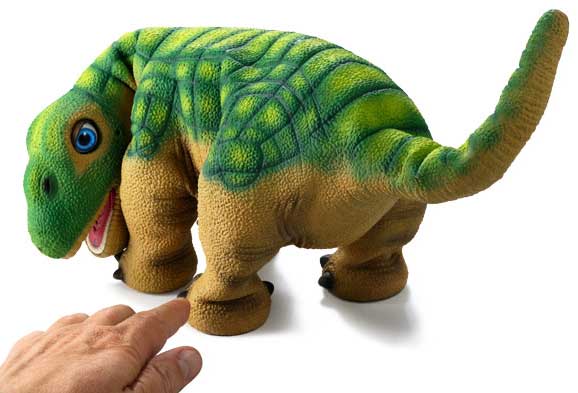
in the late 1990’s cynthia brezeal pioneered (wrote the book on) ‘sociable robots,’ based on her work with kismet. in reality, robotics was (and remains) far behind special effects houses and toy designers, who for years have been making expressive, emotive puppets specifically for engendering social bonds with animate machines. so it’s no surprise that the most sociable robots today are toys, based in large part on the rubbery animatronics of pre-CG movie monsters. new silicone rubber and smaller electronics have made this year’s batch remarkably life-like, as – for the first time – autonomous cat-sized machines are capable of facial and gestural expression beneath a seamless skin. the use of tiny video cameras and processors that allow for facial recognition and tracking makes these robots slightly more responsive to their context and able to mirror their owner’s emotions. and as with most successful design, both pleo (above) and zeno (below) succeed because they have a unique, surreal aesthetic which invites us into their alternate world rather than trying to mimic our own.

Posted in evil robots, fabrication, livingbreathing, perception, product design, soft/glowing | Comments closed

sloppy craft

41006_310.jpg

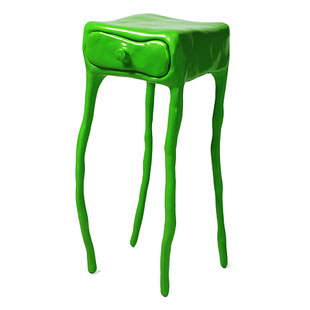
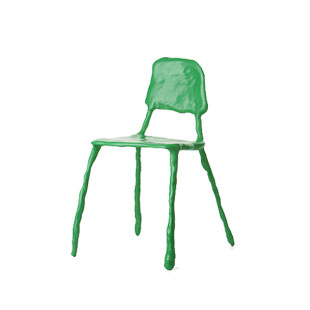
maarten baas has issued a line of mass-produced furnishings based on sloppy clay designs. the industrial clay is hand-molded around a metal frame to reveal the craft behind the product. in exchange for seeing the artist’s hand in the work you can pay $2,000-$8,000 for these pieces.

baas_clay_shelf_black_310.jpgbaas_clay_green_310.jpgbaas_clay_fan_blue_310.jpgbaas_yongstra_yellow_310.jpg

Posted in fabrication, futurecraft, materials, product design, soft/glowing | Comments closed

robot love

robotlove.jpg

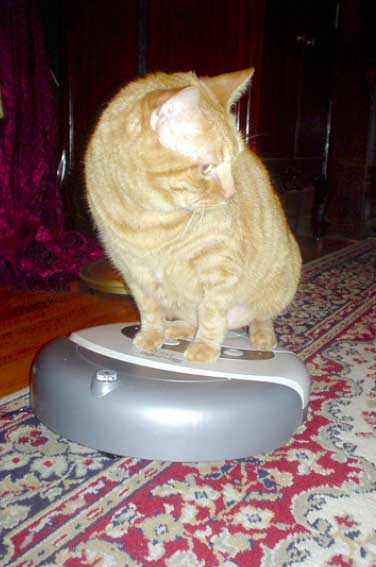
jodi forlizzi conducted an ethnographic study about vacuum cleaners called a ‘product ecology,’ essentially an object-centered analysis of how people adapt to new types of things, in this case robotic vacuum cleaners as compared to conventional ones. she gave some families roombas and others regular stick-type vacuum cleaners, and she observed significant differences in how people accepted them. most importantly, the roombas made people clean more often and encouraged more people to vacuum, ‘not just the traditional female household member serving in the role of homemaker and caregiver.’ also, the roombas were given names and social attributions. she concludes that designing lifelike, sociable robots makes people love them and rapidly adopt them. she also decides, oddly, that people should ‘design environments to adapt to robotic products, as well as products that adapt to environments.’ further study might be necessary to determine the kind of world that the robots will create when they take over.

Posted in evil robots, livingbreathing, marketing, product design | Comments closed

re-style

williamgood.jpg

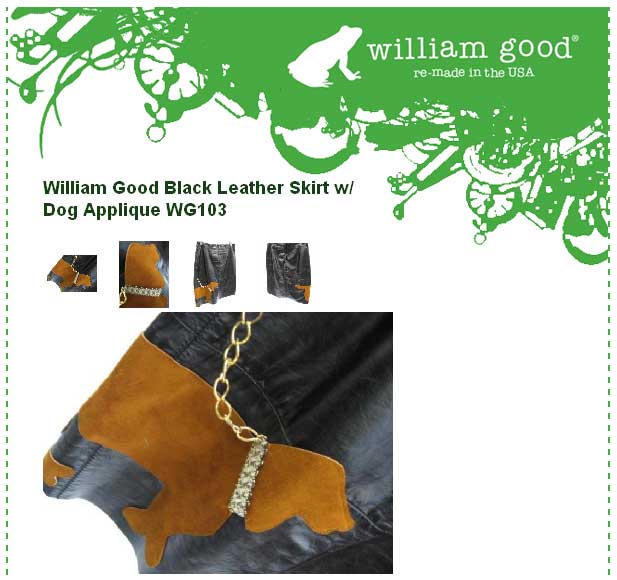
william good is a new line of fashions designed by nick graham (founder of joe boxer) sold on-line and in partnership with goodwill stores in the san francisco area. an interesting take on up-cycling, these clothes are made from donated garments at the store to which some design elements are added and then re-sold at a substantial mark-up. the resulting product adds considerable value to the charity store while have virtually no environmental impact. as with any example of successful up-cycling, the clothes are a platform for adding value through labor, and they have a ready consumer in the form of fashion- and ethically chic consumers.

Posted in blogogracy, conviviality, environment, fashion, open objects, product design, upcycling | Comments closed