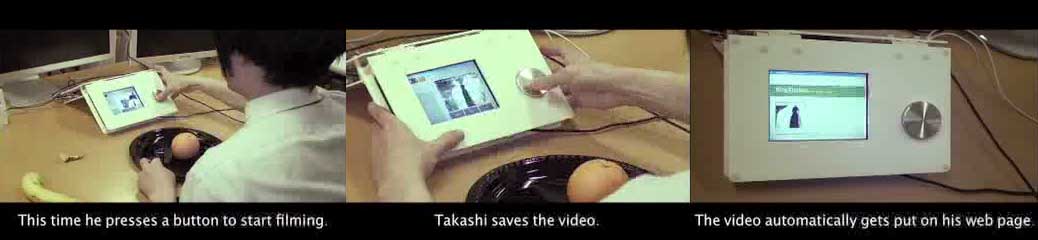
olivier peyricot’s video set is a set of cookware with integrated cameras that allows their contents to be captured and displayed on computer. this reminds me of takashi okamoto’s kitchen blog project, in which a simple countertop device allows video to be recorded and edited and posted to a blog for friends and families to share skills and recipes. the seamless integration of capture technology in everyday workspaces promises to expand on the expressive potential of our humble physical tasks.
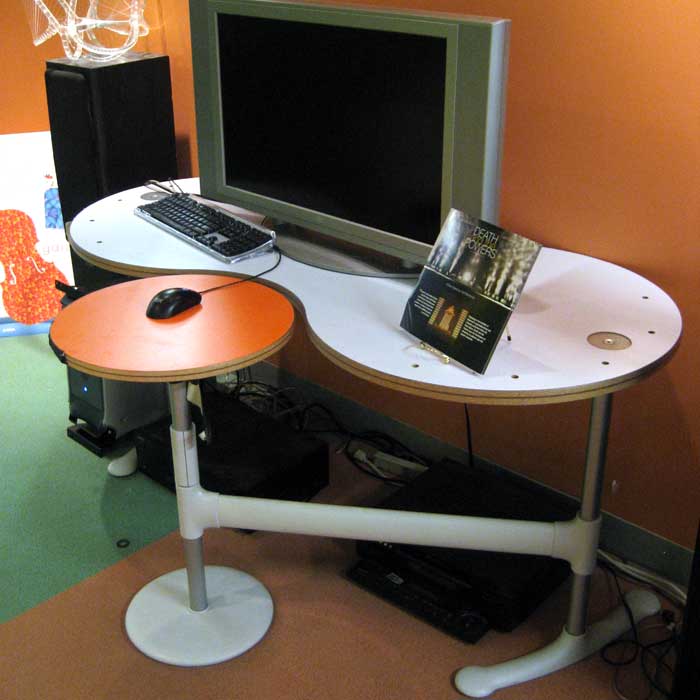
there’s something strange about the relationship between technology and the built environment: although they cost about the same, one lives much shorter life than the other. so while we’re always busy working to buy new technology, we seldom make changes to our furniture and buildings. when herman miller launched in ‘red’ line in november 2000, it was a courageous move into the internet market: cheap, easily assembled furniture sold exclusively through the web. among the innovations were small fabric dividers for that ‘open’ office feel, mobile file cabinets and platform desks with an adjustable pedestal for the once-massive CRT monitors. like the internet bubble, the furniture line collapsed and was discontinued in march of 2002. walking around the medialab i noticed a now-vintage desk from that line sitting in the hall with a new function: flat-screen TV kiosk. the monitor pedestal now sits forward, encouraging passersby to interact, and the old work surface supports a then-unimaginable large flat screen monitor. it’s encouraging that such an outdated – and seemingly obsolete – design could live for another (tiny) function before it delaminates into oblivion.
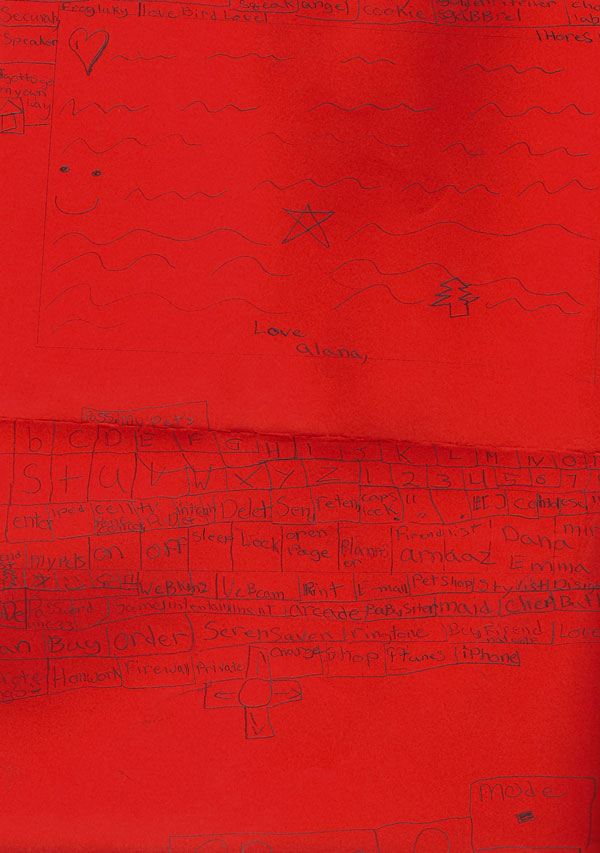
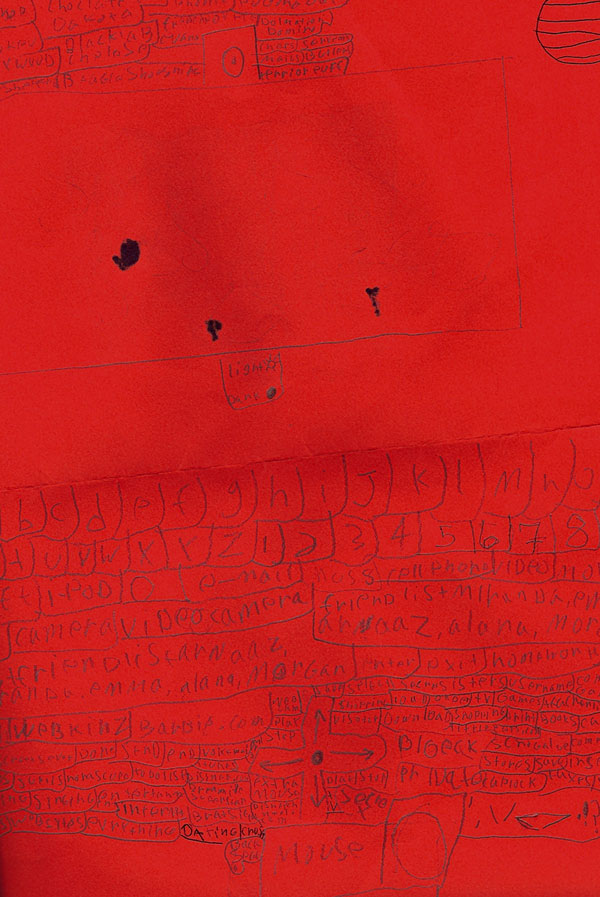
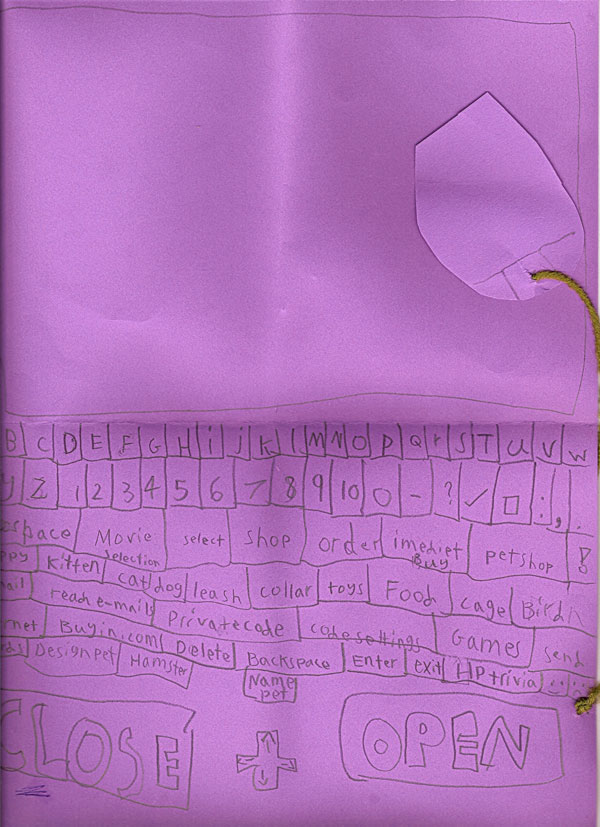
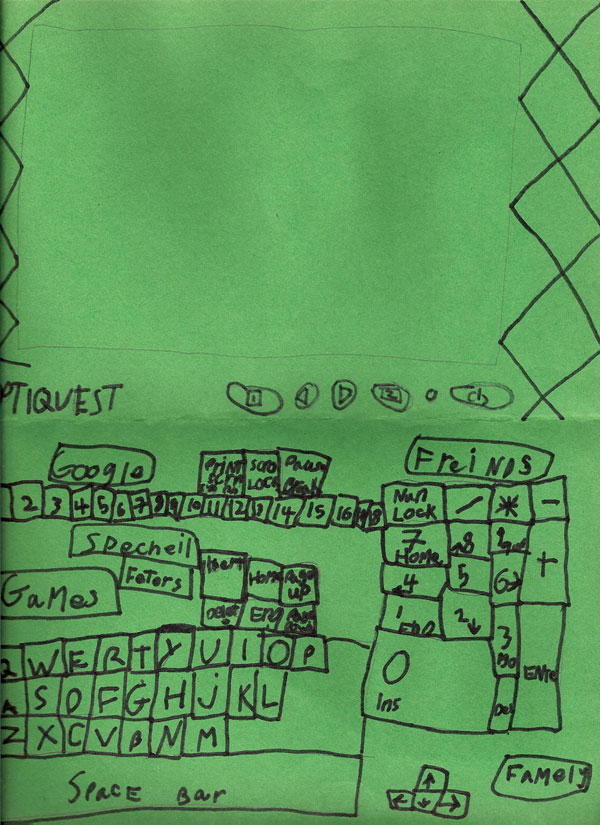
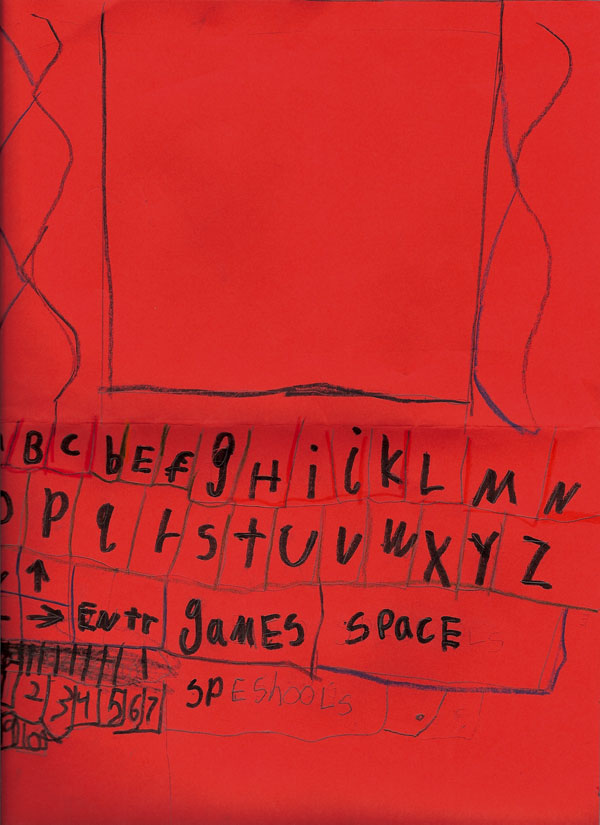
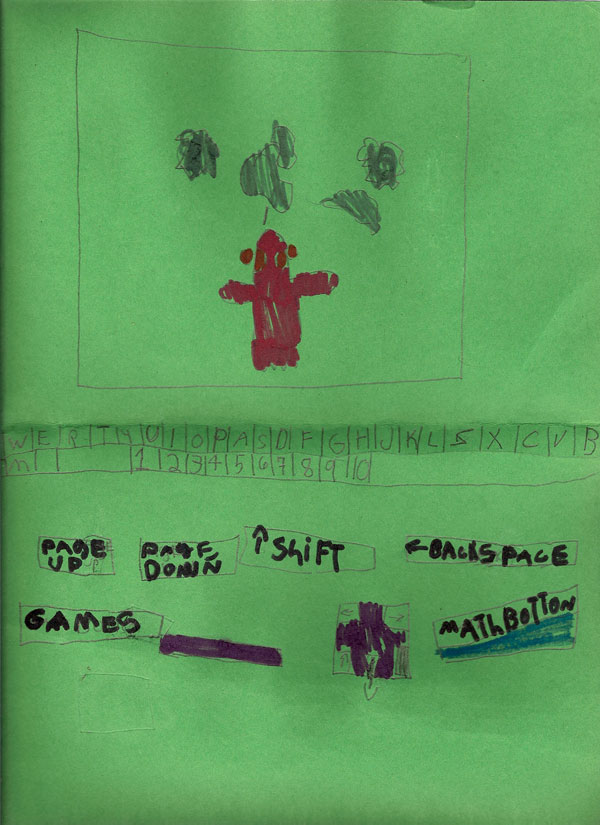
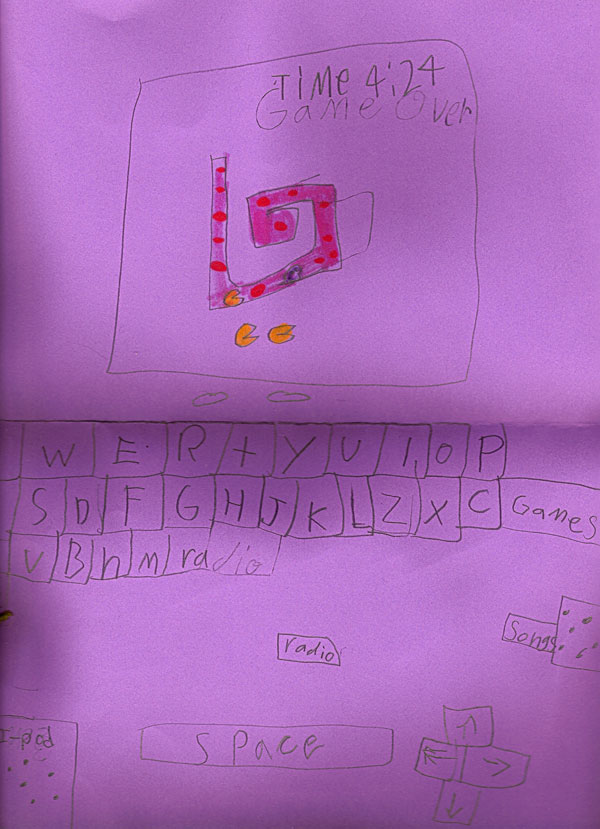
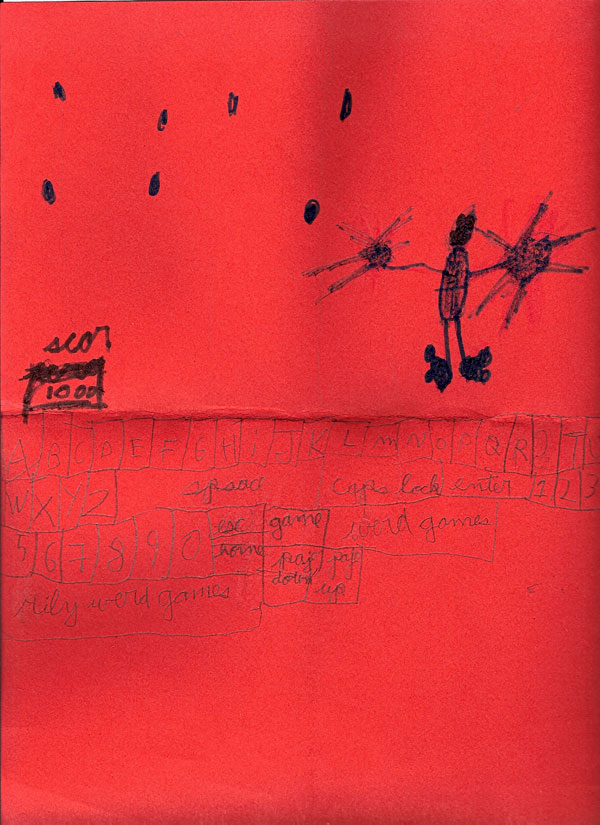
these drawings are actually prototype laptops designed by seven-to-nine-year-old children as part of the “laptop club.” the use of paper prototyping for designing laptops and learning about what children use computers for is brilliant, it also makes me wish to do the same in the class i teach. on the other hand limiting the idea of a computer to a bifold with a keyboard and the overall implication that children should be in front of screens is discouraging. the children all use the top half of the sheet of paper as a screen and take creative license with the bottom half. there, buttons like ‘barbie.com’ ‘webkinz’ ‘buyin.com’ ‘itunes’ ‘iphone’ ‘HPtrivia’ ‘imediet buy’ ‘ringtone’ speak to a crowd that is well-marketed to. my favorite is the button ‘famely’
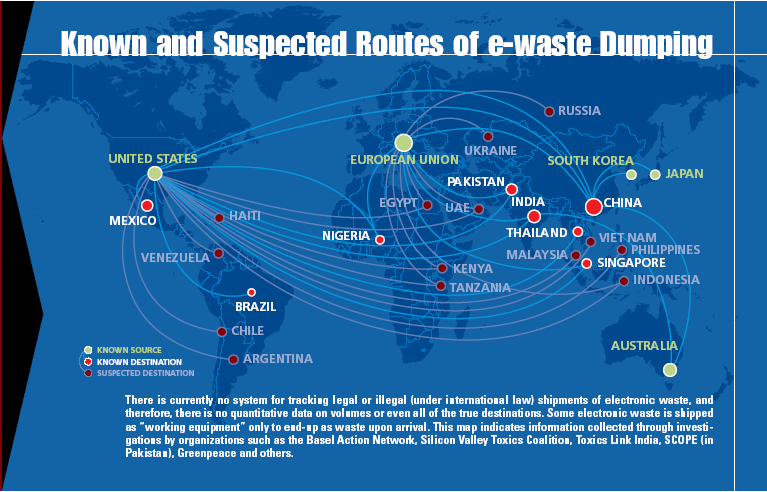
today’s AP story about the falseness of e-waste recycling is a little late, nevertheless it points out the important fact the electronics can’t really be recycled (much like other products), rather they’re burned and hacked apart to salvage what little precious metals they contain. the most important point of the article is that recycling of electronics – and everything in general – is about distance. the map above shows the probable paths of electronics waste: back to the developing countries where we manufacture and pollute. while it’s noble to return the materials to them, it points to the real motivation behind recycling: to eliminate waste from our lives by sending it so far away that we can almost never hear about it again.
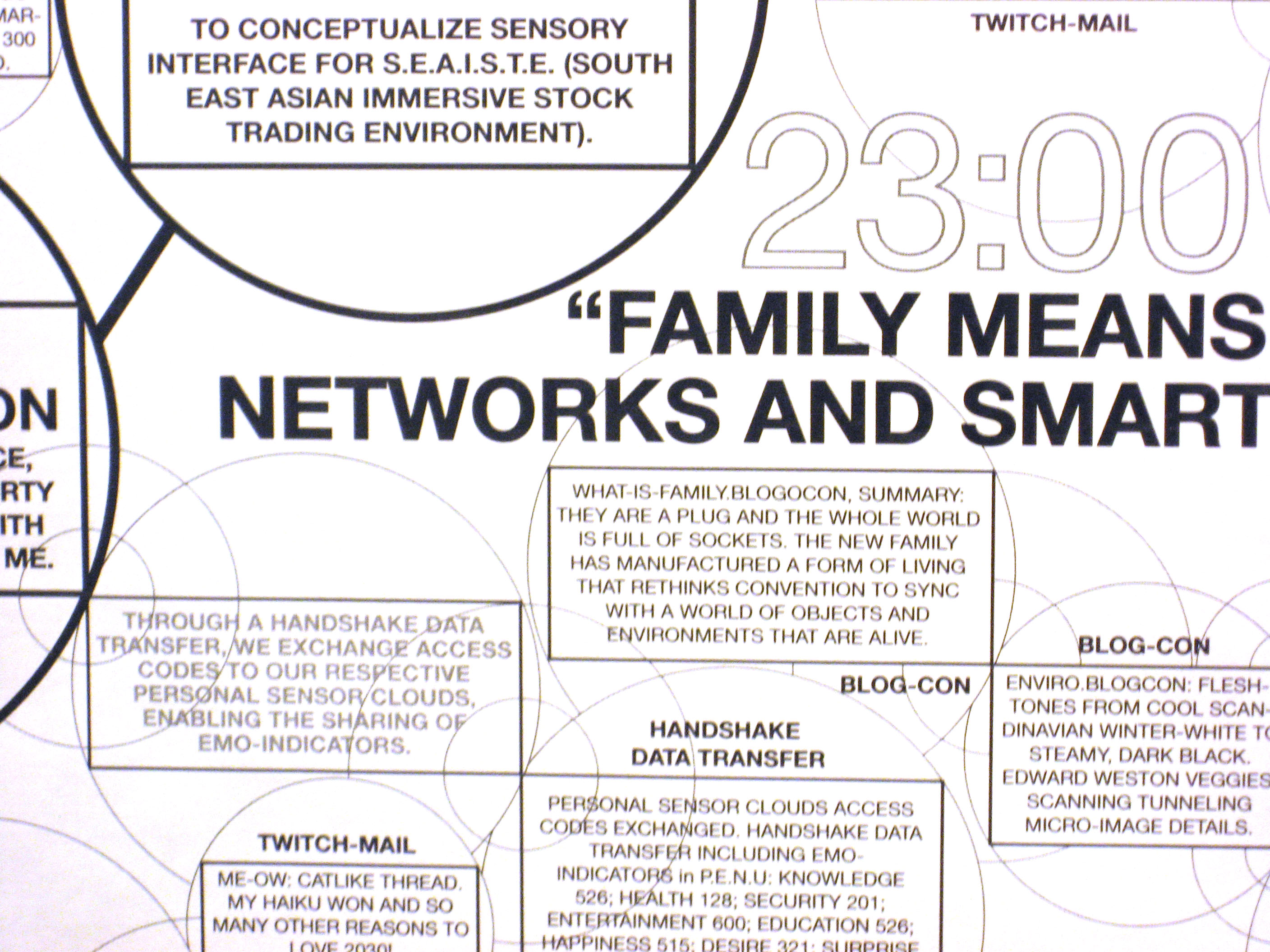
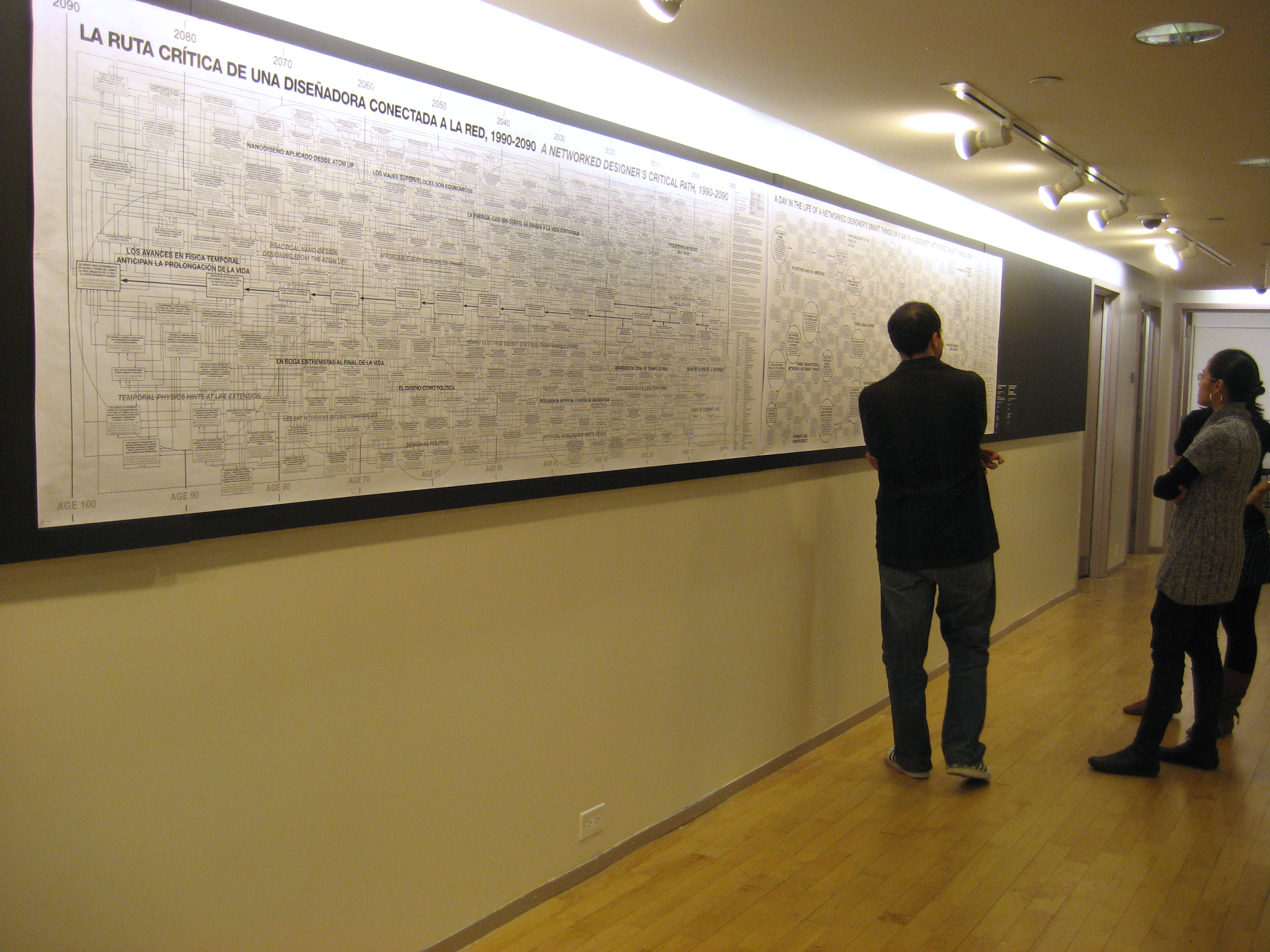
last friday i was invited by tom klinkowstein to talk about ‘living objects’ at pratt in an event called ‘it’s alive! (experience design)‘ together with irene pereyra and anthony townsend. the event looked at what the life of a designer would be like in 2030. here are some images from the poster that was prepared by tom and irene and will be exhibited in singapore this december:
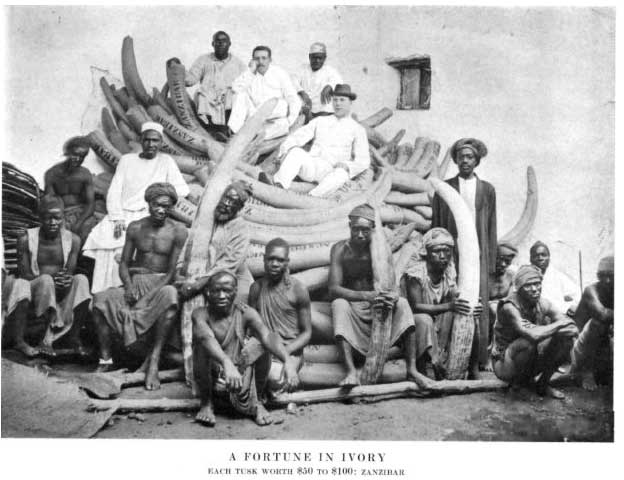
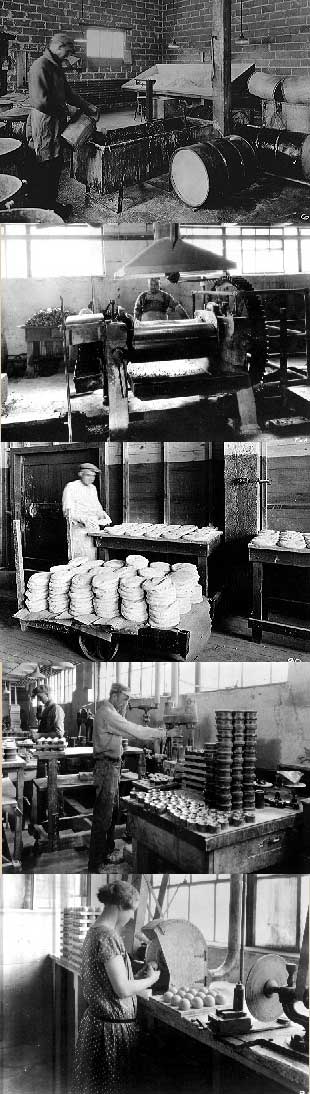
in the late nineteenth century billiard balls were the fourth most important use of ivory, after knife handles, piano keys and combs, but they required the largest and highest quality tusks. nearly 50 tons of ivory were made into billiard balls each year for the european and american markets. consumption had exhausted supplies almost entirely, so that by 1890 each ball cost the equivalent of $350 today. one american billiard manufacturer sponsored a competition to find an ivory substitute, but when john hyatt discovered the application of celluloid in 1868 he decided to found his own billiard ball manufacturing company: the albany billiard ball company, which also became america’s first plastics manufacturer. although celluloid is not technically synthetic – it is made from camphor and cellulose – it was the first commercialized thermoplastic. you can still find the archives of hyatt’s company on-line, with images from the manufacture of his paper-and-celluloid balls which revolutionized not only billiard balls manufacturing but the way luxury and non-luxury goods are made to this day, from plastic.
from top to bottom:
1)Celluloid scrap is sprinkled with solvents to plasticize it preparatory to mixing it with fillers, and is set aside to become uniformly plastic.
2) The plastic celluloid is mixed with the filler on ordinary mixing rolls. The resulting stock is formed into sheets.
3) While in a warm plastic state the product is mixed with filler and formed into pats which when cold, are hard and brittle. They are spread on the table for cooling and hardening before going into the dryer.
4) Rough balls are knocked out of molds in a hydraulic press.
5) In the final steps, balls are sanded and polished. The manufacturing process is completed with the buffing on a special buffing wheel.
anyone considering submitting to this year’s seamless fashion show might want to watch this compilation of projects from last summer’s siggraph unravel show of future fashions. this is my latest edit of all the projects i was able to grab as well as interviews with a number of designers.
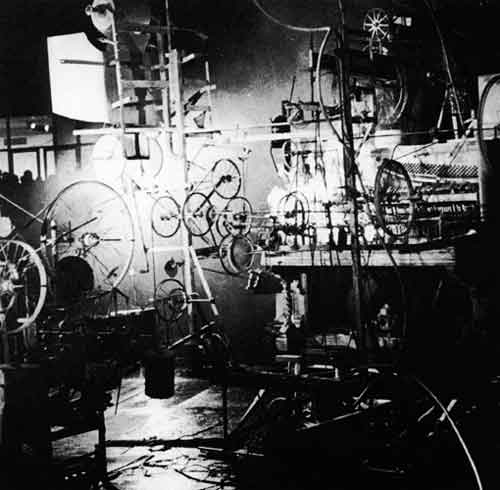
long before burning man and lithium battery flareups, art has been destroyed by fire – in 1960 swiss father of kinetic sculpture jean tinguely built a self-destructing sculpture in the courtyard of new york’s museum of modern art:
“The piano began playing. Jean had reversed the belt for his big meta-matic painting machine which was the centerpiece. The painting on the long roll of paper was supposed to spill out over the audience. I could very easily have reversed the belt, but he took my arm away and said “Don’t touch, Billy.” He had decided that whatever happened should happen. Some time later the weather balloon was supposed to blow up and explode but there was not enough gas in the gas tank we had bought, so it ended up hanging limply. The piano on the right side had a candle on the keyboard which in the third minute was lighted by an overheating resistor. Three minutes later a bucket of gasoline above the candle was tipped over and the piano began to burn gloriously while it was furiously playing away.
A small bassinet had been filled with ammonia. When I closed the switch to start the machine, Robert Breer’s task was to pour titanium tetrachloride into it. The combination of ammonia and titanium tetrachloride produces, as you all know, white… in this case white smoke, which poured out of the bassinet, until it finally engulfed the specially invited, elegantly dressed audience.
It was all over in 27 minutes. The audience applauded and descended on the wreckage for souvenirs. Jean called the event “Homage to New York.”
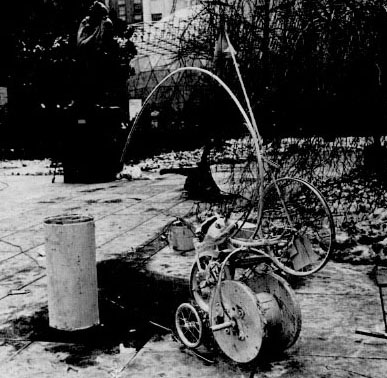
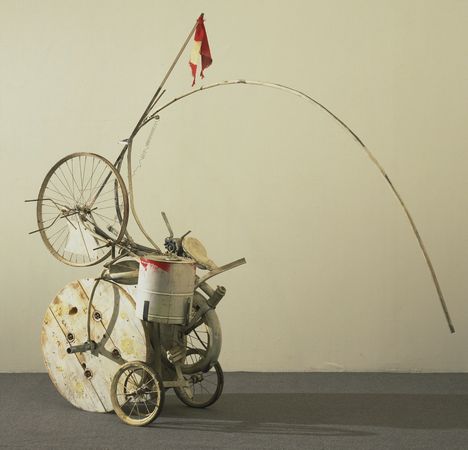
here is what remained and today stands in the museum’s collection: