self-edit

youtuberemix.jpg

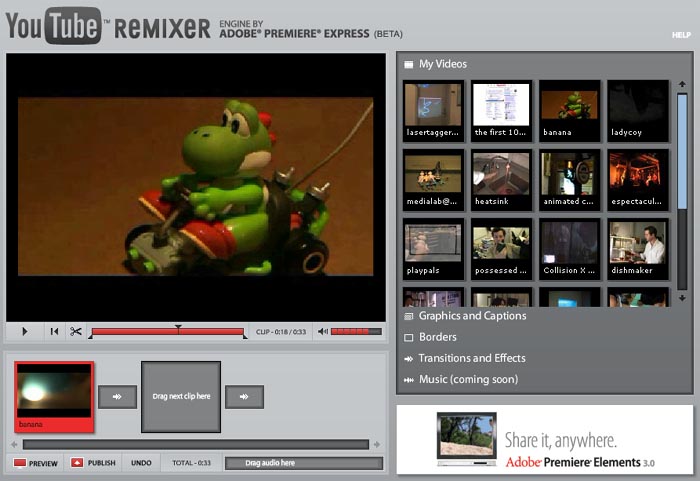
ever since google began offering on-line apps we’ve know that soon every software and storage would be off-sourced, but it remains surprising that video editing is the next big application to hit the qVGA screen – not photo editing or page layout but the most processor-intensive application of them all. and why not? since many people are still having problems editing video on their home machines, let alone publishing it online, it only makes sense that youtube offers their remix service – a small, remarkably quick on-line editing program based on adobe premiere that allows you to edit and transition between your own clips. now, it would be nice to 1.mix other people’s clips 2.add new audio 3.share the remix and 4.offer different versions of the same movie so that people can compare and improve your collection, rather than just adding stupid comments.

this is my first try:
Posted in blogogracy | Comments closed

fragrant upcycling

chromolamp1.jpg

chromolamp4.jpg

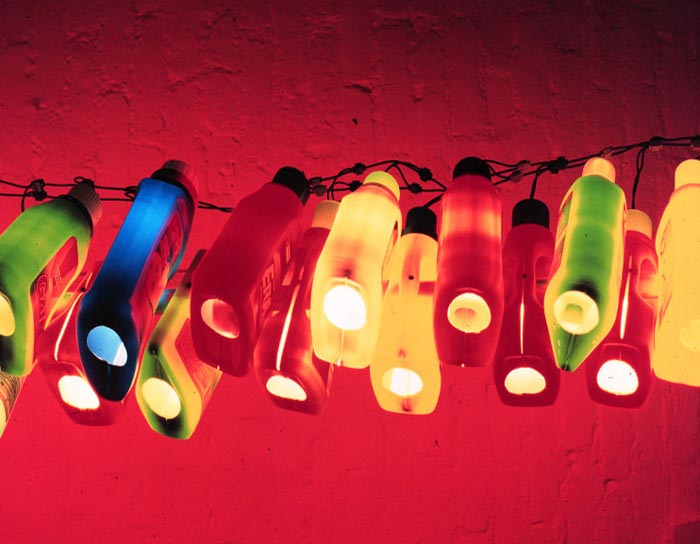
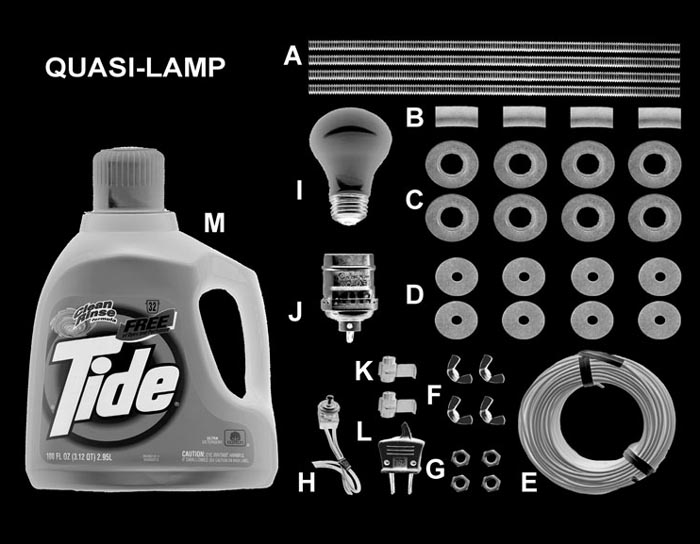
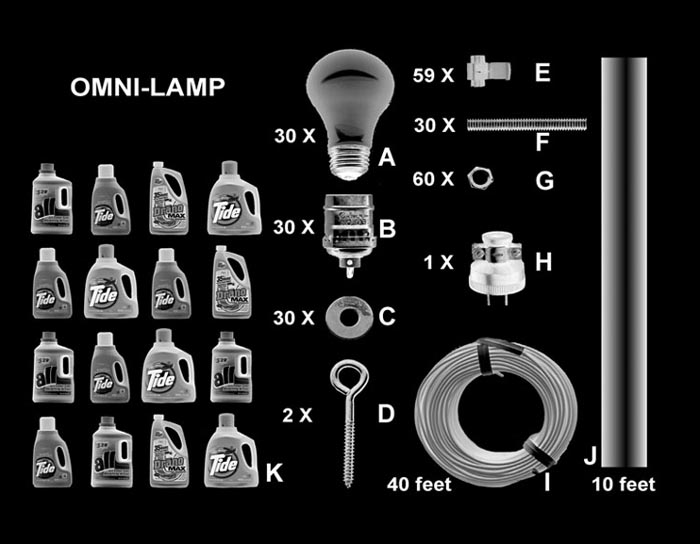
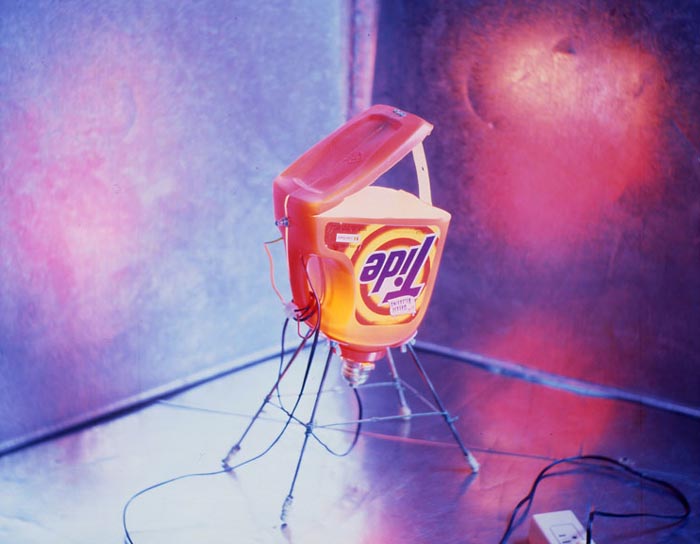
since many people have shown interest in john habraken’s wobo beer bottle bricks and up-cyling in general, i thought i would bring up yet another example: my favorite architects’ (lot-ek) 1994 chromo-lamps, crafted from discarded detergent bottles found on the streets of new york. both the quasi-lamp (top) and omni-lamp (bottom) are painstakingly assembled by rinsing out old bottles, cutting a slit in them, wiring a bulb and attaching the necessary hardware to stand them up (ok i helped build a bunch of them). what i love about these is there warm orange glow, the steampunk luxury they lend to trash and the trashiness they lend to designer lamps. plus, they smell much nicer to work with than most trash. they’ve even open-sourced their designs with these handy diagrams:

chromolamp2.jpg chromolamp5.jpg

although inspiring manufacturers to design products for upcycling is ideal, by putting a lot of labor – craft – into trash it becomes possible to vastly increase the value of an object. of course, it helps to be famous.

Posted in fabrication, open objects, product design, soft/glowing, upcycling | Comments closed

yellow spies

yellowspies.gif

many color laser printers leave an invisible tracking code printed in yellow dots that encodes your printer’s serial number and the time of printing down to the minute! fortunately mako hill at the medialab’s computing culture group has started an action to protest this invisible surveillance. but now that EFF has provided an interface to decode the dots, it should be easy to scramble them – make a captcha to avoid being captcha’d.
via edgyproduct

Posted in possessed products, surveillance | Comments closed

hoverspy

honeywell’s micro air vehicle can hover in place, fly at 50 knots and be carried around in a backpack. finally, ‘hovering’ technology has arrived – albeit in purely evil form. via did

Posted in evil robots, surveillance | Comments closed

design for humans

captcha1.gif captcha2.jpg captcha3.jpg captcha41.png captcha51.jpg captcha6.jpg captcha7.jpg captcha8.jpg

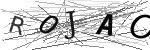
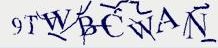
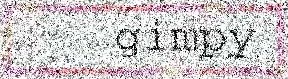
one of the concepts RAZR-designer marco susani expressed in the design intelligence conference that stuck with me for the past three years was ‘why do something with one hand when you can do it with two?‘ and so he designed a series of kitchen appliances with thin lips that forced a ceremonious handling rather than the rushed and cheap approach encouraged by plastic handles. the success of the RAZR, and the iPhone, and high heels for that matter, all come from this anti-functional design – a kind of design that makes itself noticed because it requires more attention than it has to. which brings me to captchas, those hard-to-read graphics that act as human detectors. they basically work the same reason that the iphone sells: by appealing to our sense of complexity and using our perception more than they have to. they’re also quite beautiful and reminiscent of 90’s graphic design – i would like to see some fonts inspired by these graphics used to draw in the eye, tax the attention, and make us feel more qualified to read them because “i capcha therefone i am” – and because with such a font it would be easy to overcome optical-character recognition.

Posted in product design | Comments closed

product anatomy

furby1.gif

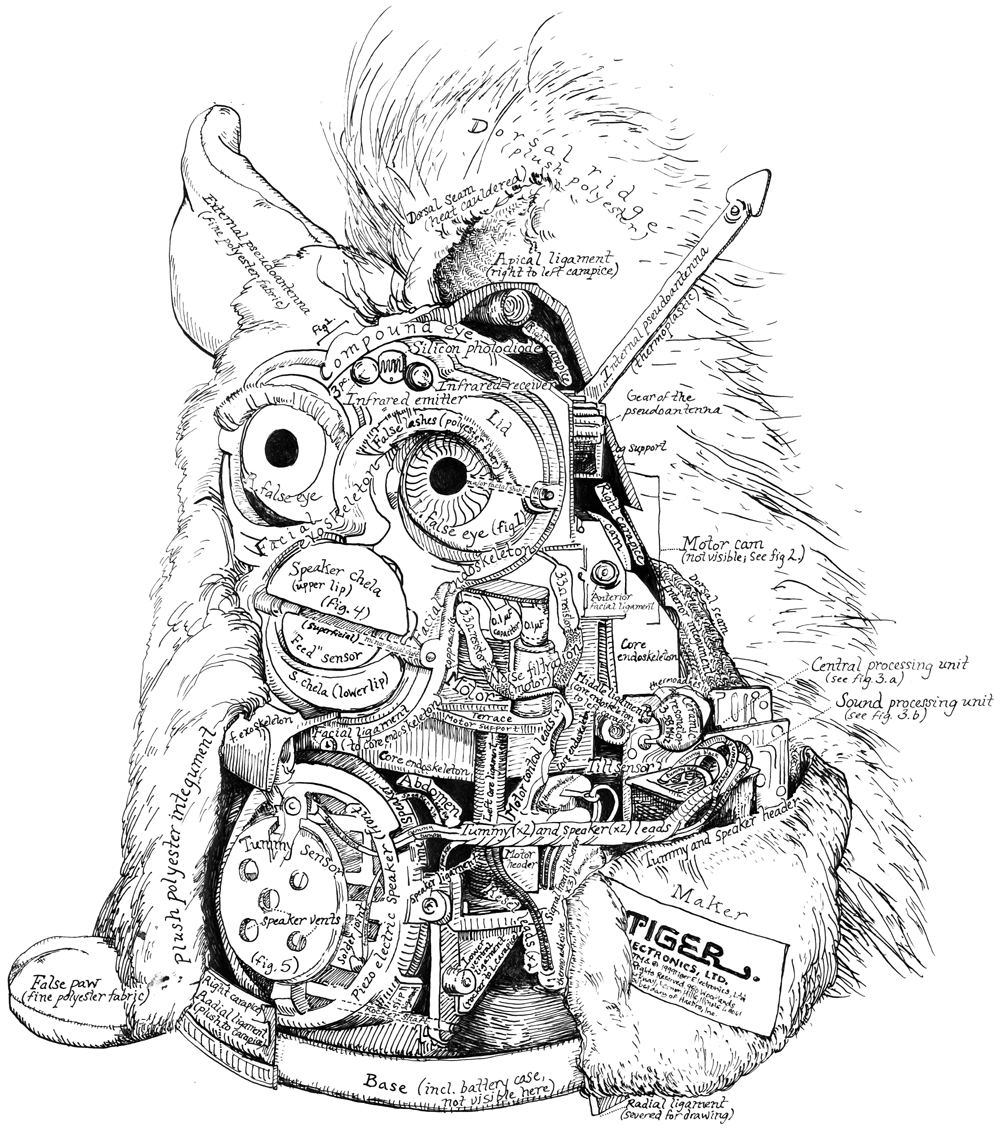
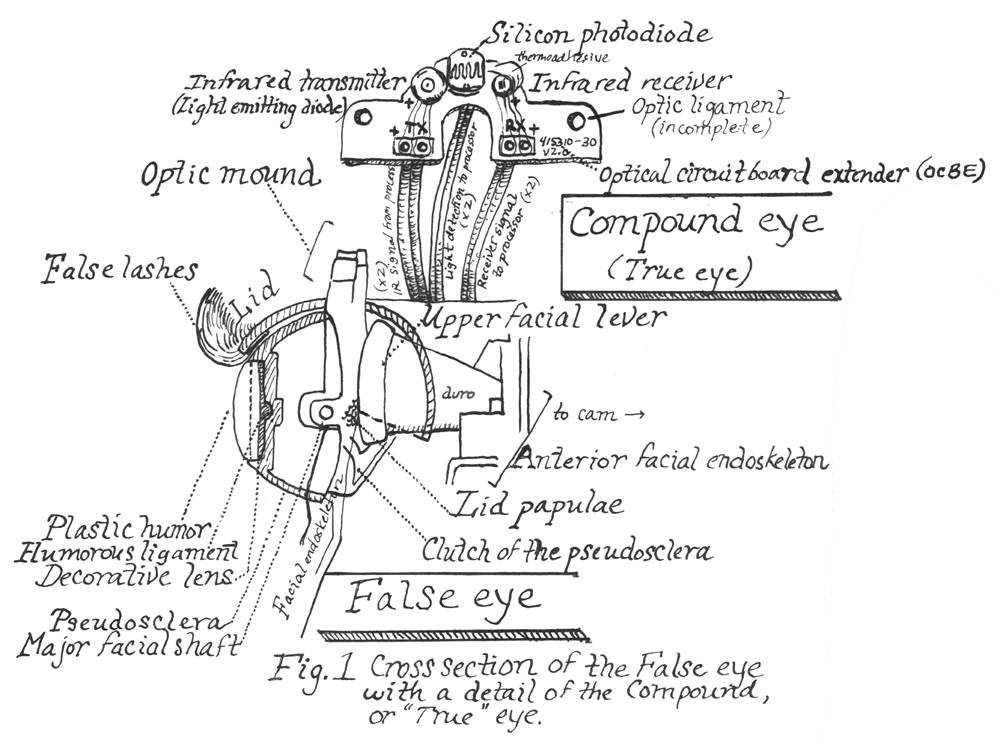
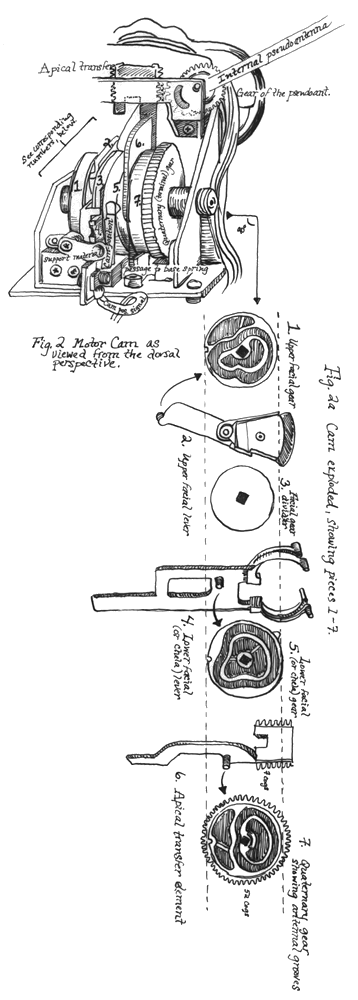
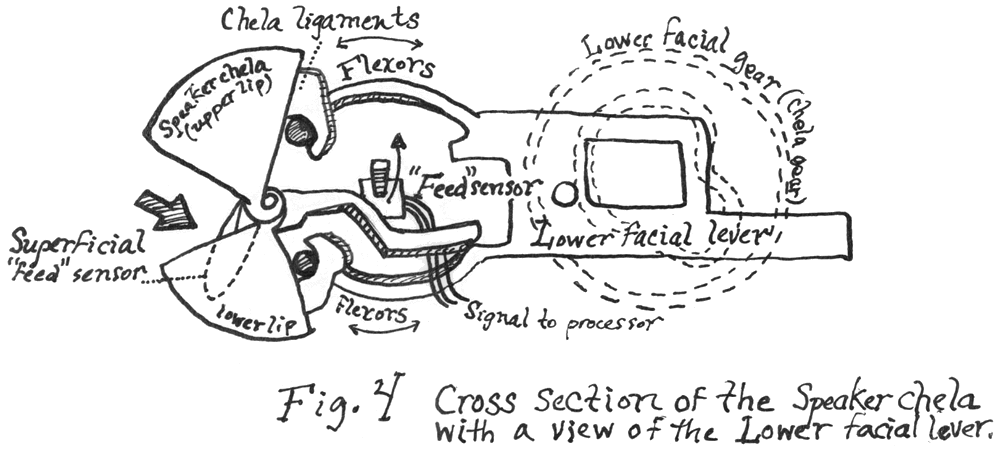
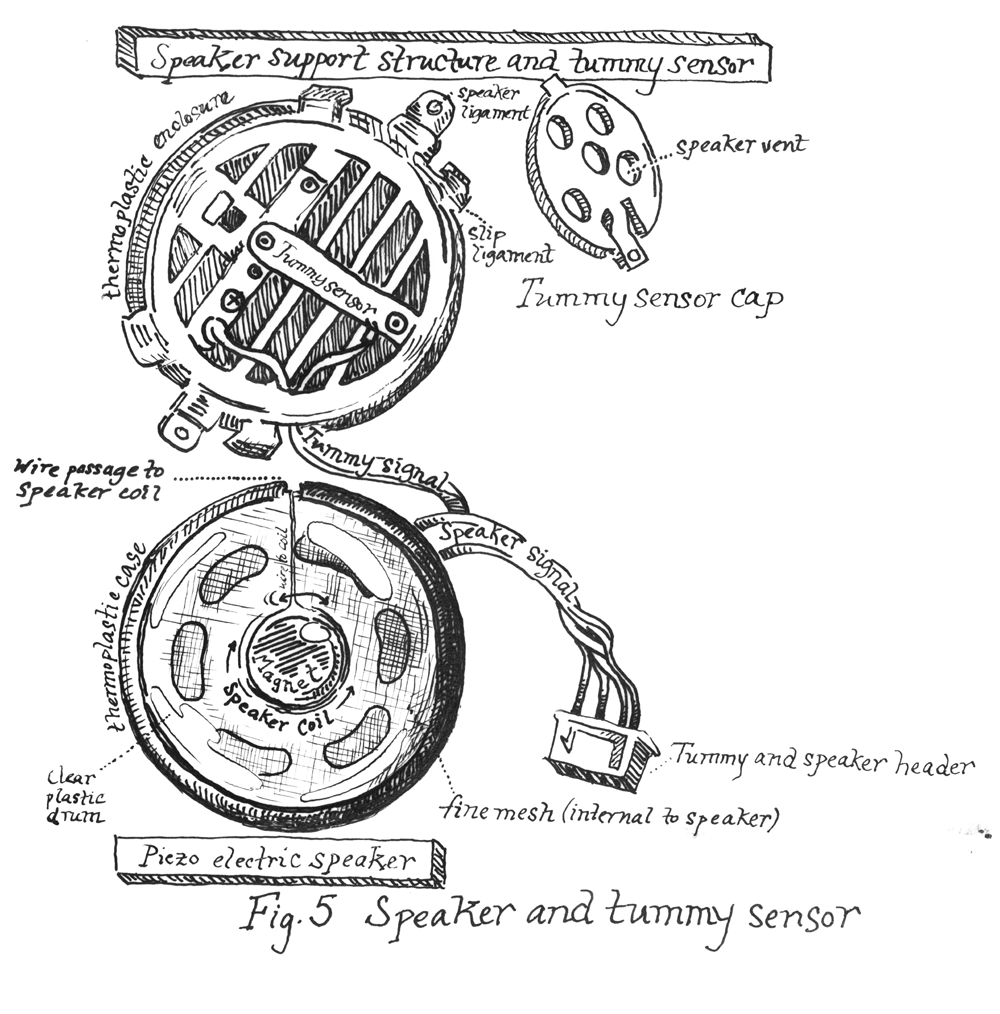
now that the craft of technical drawing has been replaced by computer-aided drafting, there’s something uniquely human about painstaking hand-drawn illustration, elevating it to an almost-art and imbuing the drawings with personality and worth they didn’t have before. these painstakingly rendered anatomical drawings of a furby are part of kelly heaton‘s work which culminated in the reflection loop – a frightening matrix of furby faces in a blank wall.

furby2.gif furby3.gif furby4.gif furby5.gif

Posted in evil robots, open objects, possessed products, visualization | Comments closed

rad viz

chernobyl.jpg

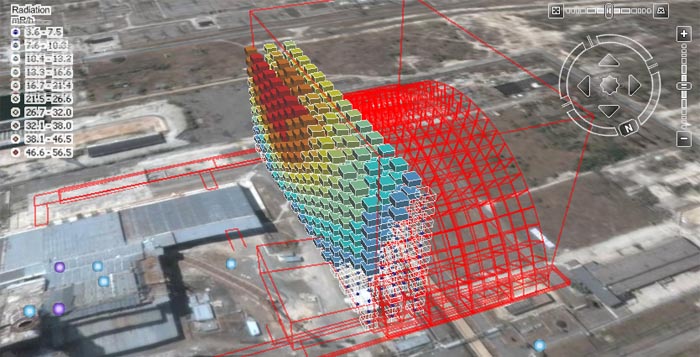
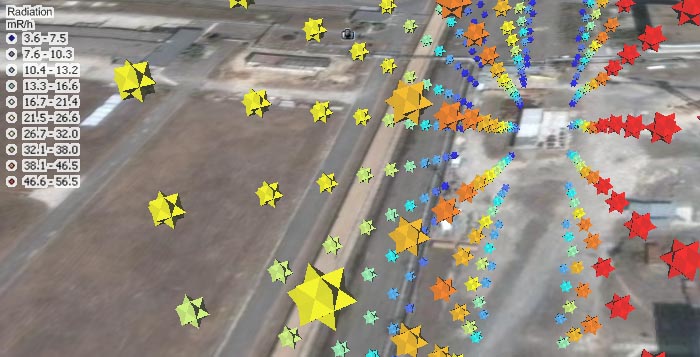
there are a lot of things we can’t see, and many of them we wouldn’t be able to understand even if we could ‘see’ them – especially when you need to see through something to understand densities, temperatures, radiation,or anything that varies along three (or more) dimensions. valery hronusov posted a series of add-ons to google earth that depict the radiation levels around the chernobyl nuclear power plant. notice how in the visualization above, you get a clear idea of hot and cold spots, whereas the visualization technique below (from a different angle) allows you get to see ‘through’ the radiation.

chernobyl2.jpg

via google earth blog

Posted in perception, visualization | Comments closed

public sedations

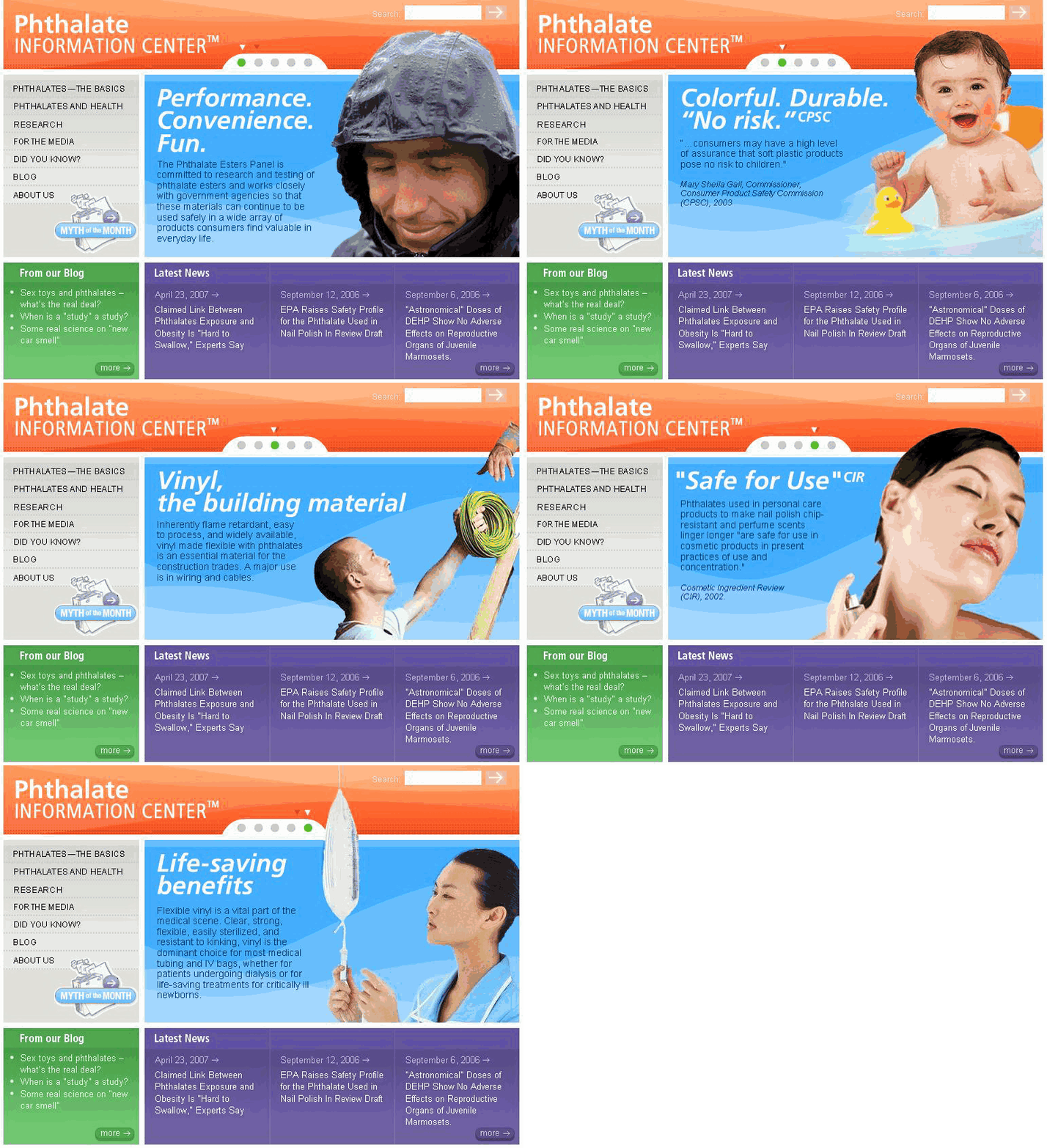
these days truth seems to be at a disadvantage. of course, people who are concerned with reality are generally less convincing than spin doctors unafraid to lie openly for personal gain. but persuasion is always tricky: if you load down your audience with too many facts, they may get bored, and if you appeal to emotional responses, you will appear biased. it seems like any issue today can benefit from some good PR, especially to overcome the exceptional efforts being made to lie to the masses. here are two examples of massive human efforts to efface reality: the competitive enterprise institute‘s pro-carbon dioxide ad (above) and the phthalates information center (below). i hope they make you angry and energize you to produce some good pro-reality advertisements.

phthalates.GIF

Posted in marketing, visualization | Comments closed